 By
·
5 minute read
By
·
5 minute read
Most safety barrier proposals are lost in the room, not on the numbers. The barrier is right, the site needs it, and the person presenting knows both of those things. The proposal still comes back with “let’s revisit next quarter.”
Part of my role at Clarity is preparing the materials that go into these conversations, and getting the Clarity team ready for client presentations. Over time you notice a pattern in which proposals get signed off and which get sent back, and it is rarely the barrier that decides it. It is usually who the proposal was written for.
A proposal that lands well speaks to everyone in the room, because operations, health and safety, finance and the board are each weighing up a different question. Below is who those people are, what each one needs to see, what your proposal should contain, and the one slide the room reacts to first.
In this article
Why Do Strong Safety Barrier Proposals Still Get Sent Back?
.webp?width=757&height=535&name=16-3%20(1).webp)
A barrier proposal is not really a purchase request. It is a decision several people have to agree on at the same time, and each of them arrives with a different priority.
When a proposal is written for one of those people, usually finance, it can seem thorough but still leave everyone else unconvinced. Operations cannot see how it fits around a live shift. Health and safety cannot see how it maps to their legal duty. Any stakeholder left unconvinced becomes a reason to defer, because waiting feels safer than approving something you do not fully follow.
The financial argument matters, and we cover it in our guide to pitching polymer barriers on ROI and cost-benefit. This article deliberately covers the rest of the room: the people whose sign-off the money alone will not win.
Who Is Really in the Room When You Present?

Before you write a single slide, work out who has to say yes. In most warehouse and factory projects it comes down to four groups, and each is asking a different question.
Operations wants to know whether this disrupts production. Their worry is downtime and access. Show them a phased install, explain how modular barriers can be worked around live operations, and design walkways around the routes people already take rather than the ones a drawing prefers.
Health and safety is thinking about legal duty and liability. Anchor this part in the law. Regulation 17 of the Workplace (Health, Safety and Welfare) Regulations 1992 requires every workplace to be organised so pedestrians and vehicles circulate safely, with sufficient separation where they share a route. That sits under the general duty in section 2 of the Health and Safety at Work etc. Act 1974, and your barrier choice should meet PAS 13.
Finance wants the cost and the return. Keep this part tight and point to the numbers rather than reciting them, then let the ROI guide do the heavy lifting.
Senior leadership or the board is weighing exposure. Their question is what happens if nothing changes, framed as risk rather than repair bills: enforcement, the HSE Fee for Intervention clock at £188 an hour, lost production and reputation.
|
Stakeholder |
The question they are really asking |
What to put in front of them |
|
Operations |
Will this disrupt the floor or slow the shift? |
Phased install, modular barriers around live operations, walkways designed to real movement |
|
Health & safety |
Does this meet our legal duty and cut our liability? |
Regulation 17, HSAWA 1974, risk assessment, PAS 13 |
|
Finance |
What does it cost and what does it save? |
Payback and cost avoidance (see the ROI guide) |
|
Senior leadership |
What is our exposure if we do nothing? |
Enforcement risk, downtime, reputation |
What Should a Safety Barrier Proposal Include?
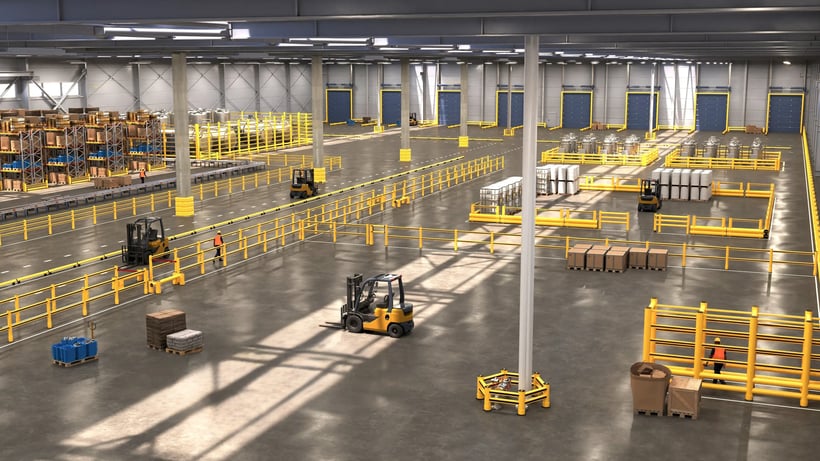
Whatever the audience, a strong proposal follows the same structure. Use this as a checklist before you present.
1. The problem, from your own site. Not a generic warning about warehouse safety, but the specific spot where people and vehicles meet on your floor.
2. The evidence. Your own near-miss reports and damage records, supported by an independent site assessment that carries weight your in-house notes cannot.
3. The options, compared honestly. Include doing nothing, painted lines alone, steel and polymer. A fair comparison builds more trust than a one-sided pitch.
4. The recommendation, with reasoning. Say clearly what you would choose and why it suits this site.
5. The cost of inaction. Set out the legal, operational and human cost of leaving things as they are.
6. The ask. State the exact decision, budget and timeline you need. Vague asks get vague answers.
7. The next step. Show what happens the moment they approve, so saying yes feels like starting something rather than opening a risk.
Get these seven parts down and you have a proposal that works whoever is reading it.
Which Slide Do Stakeholders React to First?
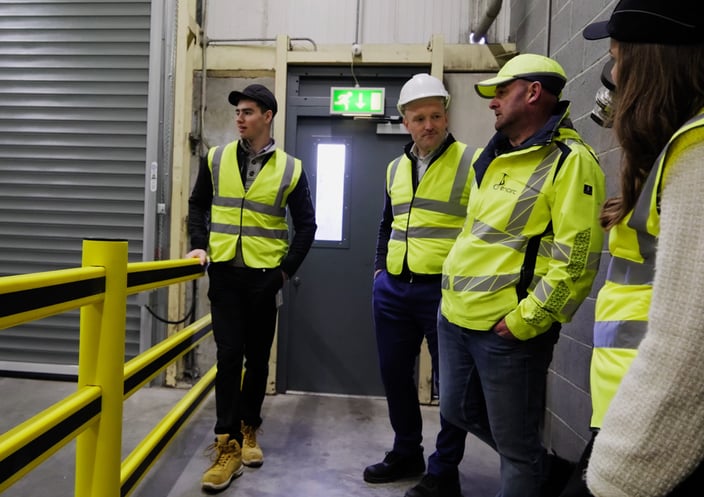
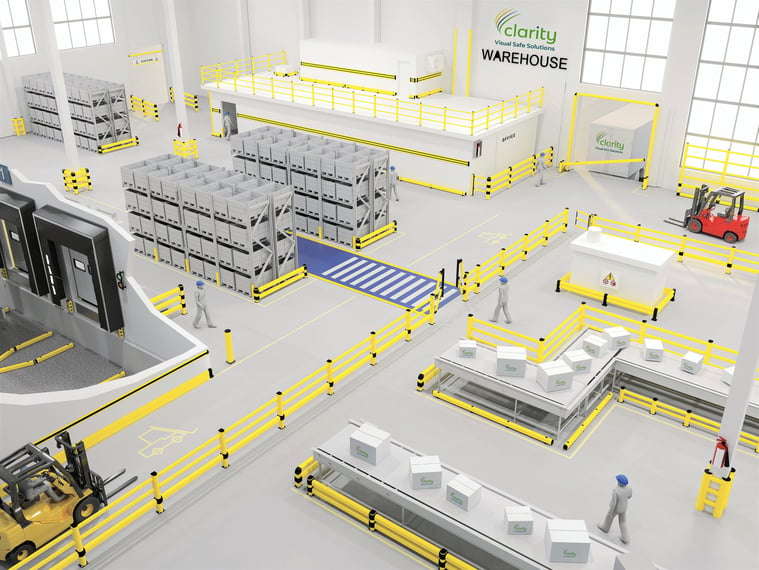
It is almost never the pricing slide. The slide the room reacts to first is the one showing your own site plan, with the places where people and FLTs currently share space marked in a colour that stands out.
That single image does something the numbers cannot. It turns an abstract risk into a specific spot on a floor everyone recognises. Operations sees the pinch point they already worry about. Health and safety sees the gap in their controls. The board sees the incident waiting to happen. Everyone is looking at the same problem before anyone starts arguing about budget.
Pair that plan with LED projected floor markings or a clear segregation layout showing the fix, and you move the room from the problem to the solution in one step.
How Do You Present to a Mixed Room Without Losing Anyone?
The order you present in matters as much as the content.
Open on the shared problem. Everyone agrees that people and vehicles meeting on the floor is a risk, so start there, on common ground, before anyone retreats into their own department’s concerns.
Then take each priority in turn, briefly. A sentence or two showing you have thought about operations, the legal duty, the cost and the exposure is enough. You are proving you have considered their question, not lecturing on it.
Anticipate the objection each person brings. Operations will ask about disruption. Finance will ask whether it can wait. Have the answer ready before the question lands. Then close on one clear ask, and leave a single page behind that they can circulate to anyone who was not there. The proposal that gets approved keeps the room on the decision, not the product.
Frequently Asked Questions
What should a safety barrier proposal include?
A strong proposal includes the site-specific problem, your own evidence plus an independent assessment, an honest comparison of the options, a clear recommendation, the cost of inaction, a specific ask, and the next step after approval.
Who signs off a warehouse safety barrier project?
It varies by business, but sign-off usually involves operations, health and safety, finance and senior leadership, with larger projects needing board approval. Identify everyone whose yes you need before you present.
How do you build a safety barrier business case in the UK?
Tie the case to your legal duty under Regulation 17 of the Workplace (Health, Safety and Welfare) Regulations 1992, your own incident and damage data, and the cost of inaction, then set out a clear recommendation and ask.
Should the proposal for finance differ from the one for the board?
The core evidence stays the same, but the emphasis shifts. Finance wants payback and cost avoidance; the board wants exposure and reputation. A good proposal carries both without leaning entirely on either.
Bringing It Together
The barrier is the easy part. Getting a room of people with different priorities to agree is where most projects stall, and a proposal built around that room is what moves them forward.
If you want an independent view of where your site is exposed before you build your case, our team can carry out a site assessment and give you evidence worth presenting. Not ready for that yet? The two-minute factory safety quiz is a free way to see where your gaps are first.
About the Author
Alana Graham is Sales & Marketing Executive at Clarity Safety, where she prepares the proposals and presentation materials that help businesses win internal approval for warehouse safety projects. She works closely with Clarity's managing director on client presentations and reviews the company's safety content before it is published.
Connect with Alana on LinkedIn

.jpeg)