 By
·
5 minute read
By
·
5 minute read
Your racking moved last month. A new production line went in the month before that. And next quarter, you're expecting a shift in picking zones to handle seasonal demand.
Every time the layout shifts, your safety infrastructure should shift with it. But in most warehouses, it doesn't. The barriers stay where they were. The painted walkways mark routes that no longer exist. And the gap between how your warehouse works and how it's protected quietly grows wider.
We see this on site visits all the time. A warehouse that looked compliant six months ago now has forklift routes crossing unmarked pedestrian paths, and nobody's updated the traffic management plan.
This guide covers what actually goes wrong when layouts change, what the law expects you to do about it, and how to build a safety system that adapts as fast as your operation does.
In this guide:
- Why Do Layout Changes Create Safety Gaps?
- What Does the Law Say About Safety After a Layout Change?
- What Safety Measures Should Change When a Warehouse Layout Changes?
- Why Do Fixed Barriers Struggle in Dynamic Warehouses?
- How Do Modular Safety Systems Keep Up With a Changing Layout?
Why Do Layout Changes Create Safety Gaps?
A layout change might seem like an operational decision. New racking goes in, a pick zone shifts location, a conveyor belt gets repositioned. But every one of those changes affects traffic flow, sightlines, and pedestrian routes.
The problem isn't the change itself. It's what gets left behind.
Painted walkways still mark the old route. Barriers protect zones that no longer need them, while new conflict points sit completely unguarded. Forklift drivers learn the new layout quickly because they have to. Pedestrians, especially newer staff or visiting contractors, follow the old signage and markings because that's all they can see.
The HSE's own data makes the risk clear. Vehicle strikes account for around 16% of all fatal workplace injuries in Great Britain, with an average of 21 lives lost every year over the past five years. A significant number of those incidents happen in warehouses and distribution centres where pedestrians and vehicles share space.
In October 2025, Biffa was fined nearly £2.5 million after a worker was crushed by a vehicle on site. The HSE inspector noted that control measures were in place, but a lack of monitoring and supervision allowed poor practices to develop. That's the pattern we see repeatedly: protection that was once adequate becomes inadequate because the environment around it changed.
What Does the Law Say About Safety After a Layout Change?
There's no grey area here. UK law treats a layout change as a trigger for review.
The Management of Health and Safety at Work Regulations 1999 require employers to review their risk assessments whenever there's reason to suspect they're no longer valid, or when there's been a significant change in the work being carried out. A layout reconfiguration counts.
The Workplace (Health, Safety and Welfare) Regulations 1992 go further. They require that traffic routes are organised to allow pedestrians and vehicles to circulate safely. If your layout changes and your traffic routes aren't updated accordingly, you're out of compliance.
And HSG136, the HSE's guidance on workplace transport safety, is clear that the most effective way to protect pedestrians is physical separation from vehicles. When a layout change removes or undermines that separation, the risk assessment needs updating, and so does the physical protection.
Fines for getting this wrong are substantial. In 2025 alone, the HSE issued workplace transport-related fines exceeding £2.5 million in single cases, with total health and safety fines reaching nearly £11 million in April 2025 alone.
What Safety Measures Should Change When a Warehouse Layout Changes?
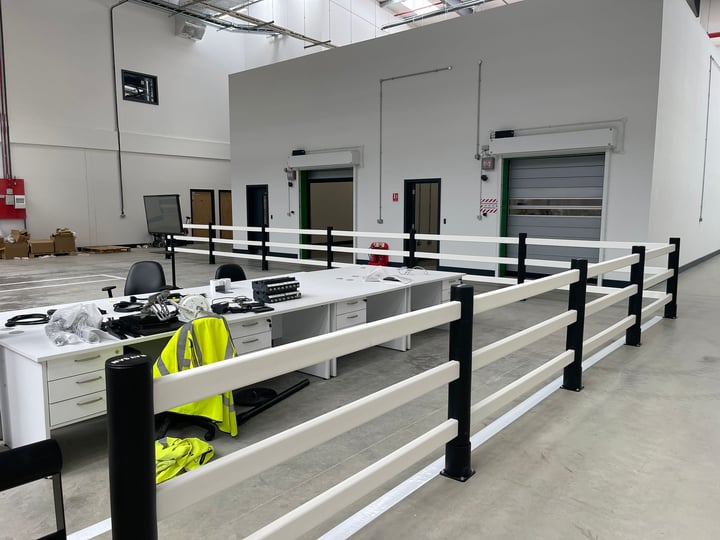
Every layout change should trigger a structured review. Not a full-scale audit, necessarily, but a focused check of the areas affected by the change.
Pedestrian Routes and Crossing Points
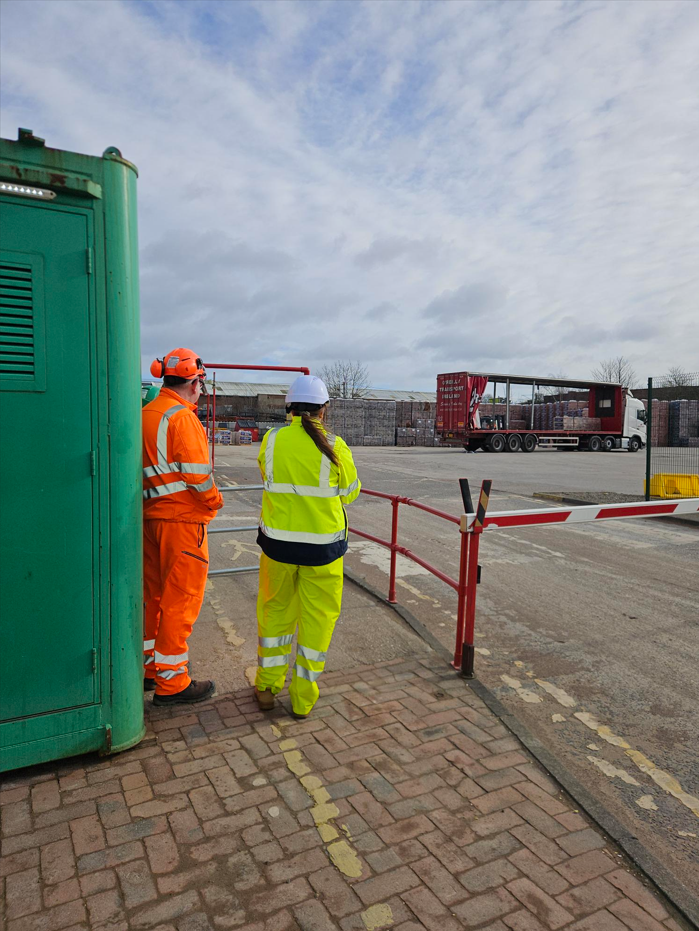
Walk the new layout during live operations. Are pedestrians still following marked routes, or are they cutting through new gaps in the racking? Are crossing points still positioned where people actually need to cross, or have desire lines shifted?
Barrier Placement
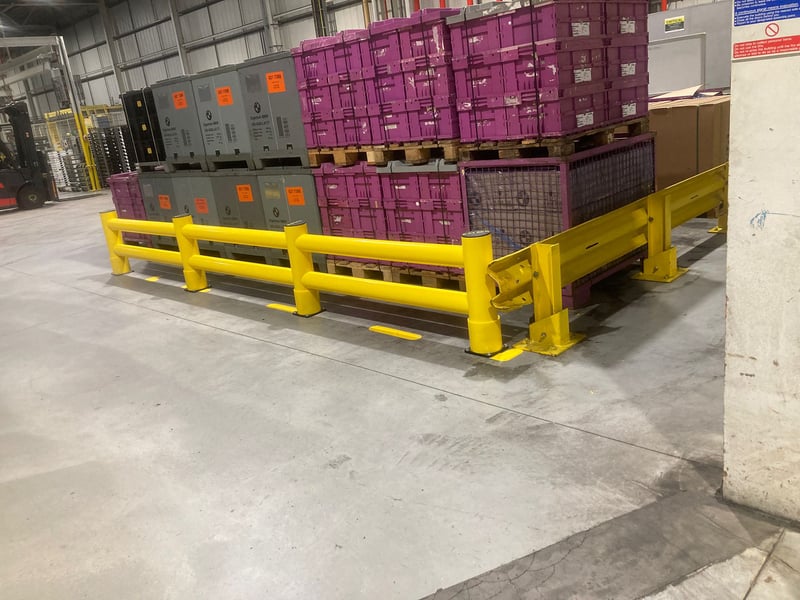
Are barriers still separating the right zones? A barrier that protected a pedestrian walkway beside the old racking layout might now sit in the middle of a forklift aisle, creating an obstruction rather than offering protection.
Floor Markings and Visual Guidance
Painted lines are the first casualty of a layout change. They can't be moved, and they don't fade fast enough to stop people following them. If your walkway markings still show the old route, you're actively guiding people into danger.
Sightlines and Blind Spots
New racking, machinery, or stock positions can block the sightlines that previously kept an intersection safe. Corners that were once open become blind spots overnight.
The key question to ask after every layout change: where do people and vehicles now share space that they didn't before?
Why Do Fixed Barriers Struggle in Dynamic Warehouses?
If your warehouse changes layout regularly, fixed steel barriers become a problem rather than a solution.
Steel systems are typically welded or cemented in place with deep floor fixings. Moving them means angle grinders, concrete repairs, and specialist contractors. The cost of reconfiguring a steel barrier system can rival the original installation cost, and the process usually requires shutting down part of the warehouse.
The result? Most warehouses don't move them. They work around outdated barrier layouts, leaving new risk areas unprotected while old barriers guard zones that no longer need them. Safety stagnates while operations evolve.
Painted floor lines have the same problem. Once they're down, they're down. Repainting requires drying time, often overnight or over a weekend, and the old markings show through for weeks. In the meantime, your warehouse has two sets of walkway markings and nobody knows which one to follow.
For warehouses that change layout quarterly or even seasonally, these rigid systems aren't just inconvenient. They're a compliance risk. If you can't practically move your safety infrastructure when your layout changes, those layout changes will outpace your protection, and the HSE won't accept that as an excuse.
How Do Modular Safety Systems Keep Up With a Changing Layout?
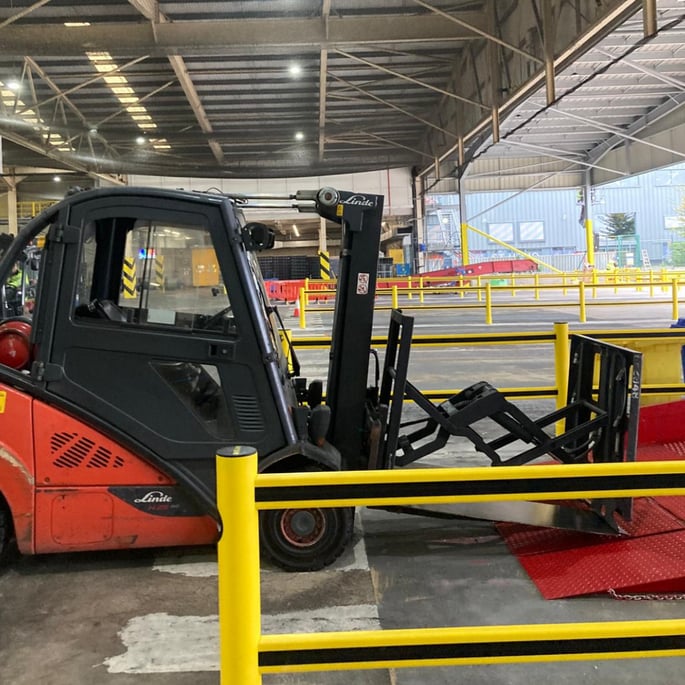
The most practical way to keep a dynamic warehouse safe is to match your safety system to the pace of change.
Modular Polymer Barriers
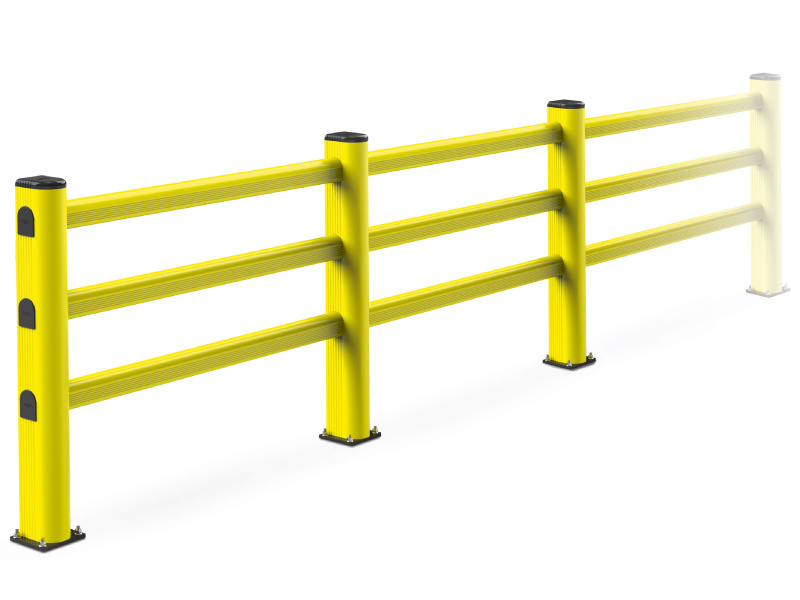
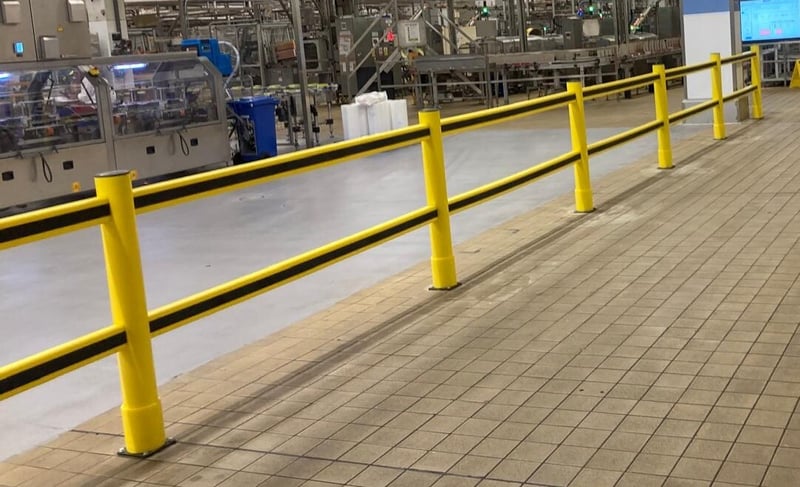
Polymer barrier systems are designed to be reconfigured without specialist tools or contractors. The post-and-rail system disassembles and reassembles quickly, meaning you can reposition barriers during a maintenance window rather than a full operational shutdown.
They can be cut to size on-site, extended, shortened, or rerouted as your layout demands. When BW Integrated Systems needed to reconfigure pedestrian walkways for new production lines, their modular barriers moved with them with no floor damage and no prolonged downtime.
Because polymer barriers flex on impact rather than deforming permanently, they also avoid the floor damage that steel systems cause. This matters in dynamic warehouses where barriers get relocated regularly. You shouldn't need to repair the concrete every time you move a barrier.
PAS 13 compliance is worth checking here too. The best modular systems are independently tested to PAS 13:2017, giving you verified impact ratings rather than manufacturer claims.
LED Projected Floor Markings
For visual guidance that needs to change quickly, LED projected floor markings offer something painted lines simply can't: instant reconfiguration.
These overhead-mounted systems project bright, high-contrast walkway markings, warning zones, and crossing points directly onto the floor. Because nothing physically touches the ground, there's no wear, no fading, and no drying time. When the layout changes, the projections can be repositioned or reprogrammed to match.
They're particularly useful in leased warehouses where permanent floor modifications can trigger reinstatement costs at the end of a lease. They're also effective in environments where dust, moisture, or heavy traffic would destroy traditional painted markings within weeks.
The strongest approach combines both: physical polymer barriers where impact protection is needed, and LED projected markings where visual guidance and flexibility matter most.
How Can You Future-Proof Your Warehouse Safety Plan?
The best safety plans anticipate changes in advance.
If your warehouse changes layout more than once a year, it's worth building flexibility into every safety decision from the start. That means choosing modular barrier systems over fixed installations, using visual guidance that can be updated without downtime, and writing your traffic management plan with adaptability in mind.
Document your barrier layout and keep spare components available. Plan potential future configurations during the initial design, not as an afterthought. And build layout change reviews into your standard operating procedures so the safety check happens automatically rather than being forgotten in the rush to get the new layout operational.
At Clarity, we work with warehouses across the UK that face exactly this challenge. We design safety systems around how your operation actually works, including how often it changes. Our site assessments look at current risks and future flexibility, so the protection we recommend today still makes sense when your layout shifts next quarter.
Book a free site assessment, and we'll help you design a safety plan that moves when your warehouse does.