 By
·
6 minute read
By
·
6 minute read
Polymer barriers have solved safety problems for hundreds of UK warehouses. But that doesn't mean they're the right solution for yours.
Your prioirity is no doubt to protect your team and keep operations running without interruption. The last thing you need is to spend thousands on barriers that aren't fit for purpose.
In this article, we'll walk you through five straightforward questions that tell you whether polymer barriers suit your site or whether you need to consider a different approach.
Contents:
- What Questions Should You Ask Before Choosing Polymer Barriers?
- What Vehicle Weights and Speeds Are You Dealing With?
- What Temperature Range Does Your Site Experience?
- What's Your Floor Condition and Fixing Requirements?
- How Often Does Your Warehouse Layout Change?
- What's Your Primary Risk - Pedestrians or Assets?
- When Should You Choose Something Other Than Polymer Barriers?
- How Can You Make the Right Decision for Your Site?
What Questions Should You Ask Before Choosing Polymer Barriers?
Most barrier failures happen because the wrong protection was matched to the wrong environment.
A barrier system that works brilliantly in one warehouse can fail in another. The difference isn't quality - it's suitability. Temperature extremes, vehicle weights, floor conditions, and operational requirements all affect whether polymer barriers will provide the protection you need.
These five questions help you assess whether polymer barriers match your specific circumstances. If they don't, we'll be honest about what will work better.
What Vehicle Weights and Speeds Are You Dealing With?
Polymer barriers tested to PAS 13 standards can absorb significant impacts - typically up to 10,000 joules. That's enough to stop a 2-tonne forklift travelling at walking speed.
For most warehouse environments with standard counterbalance or reach trucks moving at controlled speeds, polymer barriers provide excellent protection. The polymer flexes on impact and returns to position, protecting the floor, vehicle, and barrier itself.
When polymer barriers work well:
- Forklifts between 1.5 and 3 tonnes
- Operating speeds below 10mph
- Standard warehouse traffic patterns
- Pedestrian protection zones
When you need to consider alternatives:
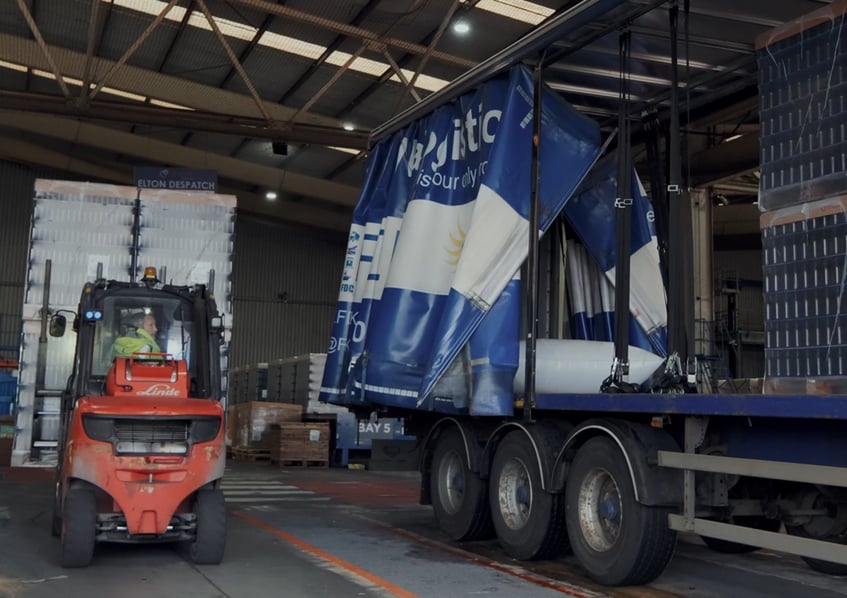
- Very heavy vehicles (agricultural machinery, large telehandlers over 5 tonnes)
- High-speed vehicle routes (outdoor yards, loading areas with HGV traffic)
- Extreme impact zones requiring bollards
In heavy impact scenarios, polymer bollards or steel bollards might be more appropriate. Bollards are specifically designed to protect building corners, doorways, and critical infrastructure from vehicles weighing several tonnes.
What Temperature Range Does Your Site Experience?
Temperature affects all materials, but some handle extremes better than others.
Standard warehouse environments (5°C to 30°C) cause no issues for quality polymer barriers. They maintain structural integrity and impact resistance across typical UK temperature ranges.
Where polymer barriers excel:
- Standard warehouse environments
- Temperature-controlled facilities
- Indoor manufacturing sites
- Distribution centres
Temperature considerations:
- Extreme cold (below -20°C) - Some polymers become brittle in deep freeze environments
- Extreme heat (above 50°C) - Foundries or facilities near industrial ovens may soften polymer
- Rapid temperature cycling - Loading bays with constant indoor/outdoor transition
If your site operates a deep freeze warehouse storing goods below -25°C, or you have areas near industrial ovens exceeding 50°C, you need to discuss specific polymer grades with your supplier. Some high-performance polymers handle these extremes, but not all.
For truly extreme environments, steel barriers with appropriate coatings might be more suitable. But remember that steel brings its own problems - corrosion in moisture-rich environments, maintenance requirements, and higher repair costs after impacts.
Download our Cold Line brochure
What's Your Floor Condition and Fixing Requirements?
Floor condition matters more than most people realise.
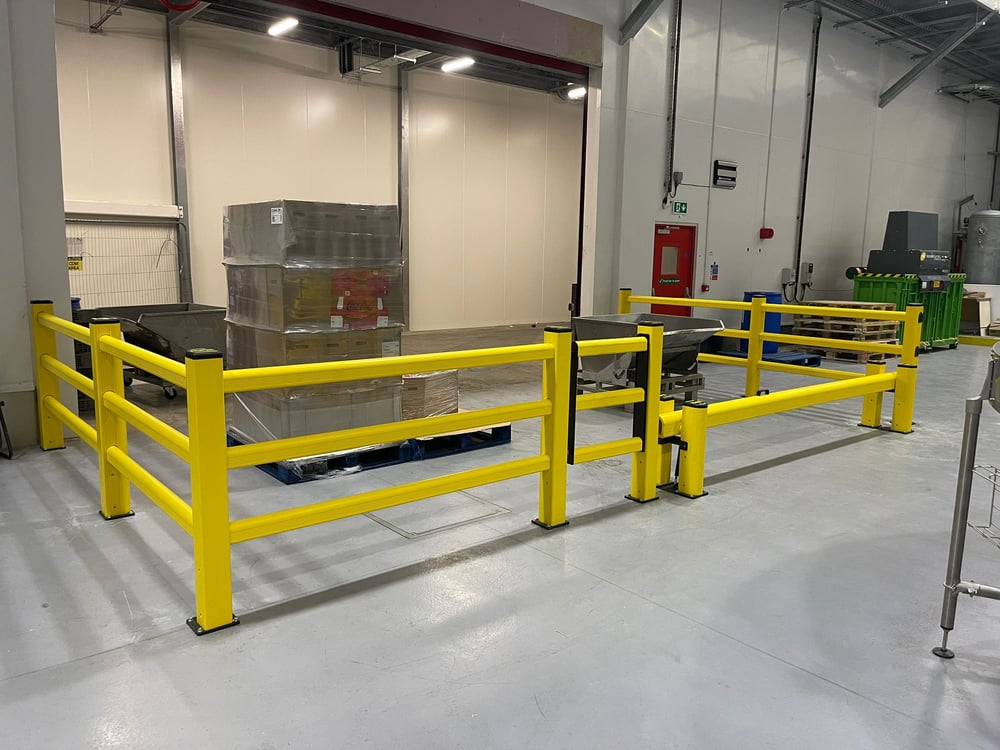
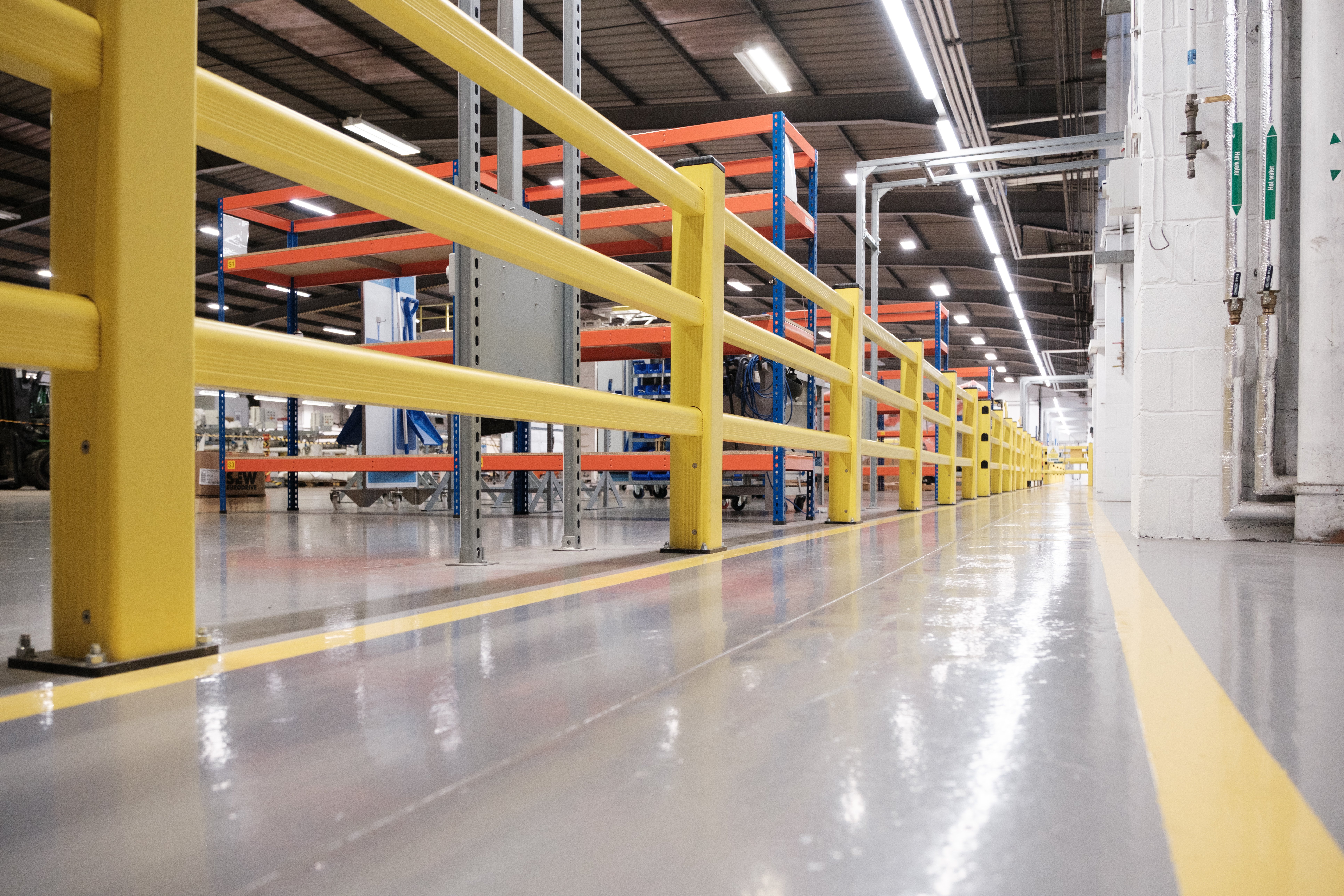
Barriers can be fixed or modular. Fixed systems use chemical anchors drilled into concrete. Modular systems use base plates and mechanical fixings that can be relocated. Both require reasonable floor integrity.
What constitutes "reasonable floor condition"?
- Concrete slab in good repair
- No significant cracking or spalling
- Relatively level surface
- Adequate concrete depth for anchor penetration (typically 100mm minimum)
Floor challenges that complicate installation:
- Extensively damaged concrete with widespread cracking
- Thin screeds over existing floors
- Uneven surfaces with significant height variations
- Floors with underfloor heating or services
If your floor is in poor condition, repairing it first often makes more sense than installing any barrier system. Damaged floors won't hold fixings properly, regardless of barrier type.
For sites with pristine floors (food production, pharmaceutical facilities), modular polymer systems often prove ideal. They can be installed and relocated without permanent floor damage, protecting your surface investment.
One practical advantage - polymer barriers are significantly lighter than steel equivalents. This makes them easier to handle during installation and reduces the load on floor fixings.
How Often Does Your Warehouse Layout Change?
The possibility of layout changes can shut down the business case for permanent barriers before you've even had the opportunity to pitch the benefits and ROI.
If your racking is reconfigured quarterly, your production lines rotate seasonally, or you're expanding operations next year, modular systems deliver clear advantages over welded steel installations.
Modular polymer barriers suit dynamic environments:
- E-commerce facilities with seasonal peak adaptations
- Contract manufacturers serving multiple clients
- Growing businesses planning expansion
- Sites with regular compliance-driven layout reviews
Modular polymer systems disassemble, relocate, and extend without specialist contractors or hot works. Posts and rails separate easily, move to new locations, and reassemble quickly. Your safety investment adapts with your business.
Learn more: What is a Modular Barrier System?
Fixed barriers suit stable environments:
- Long-established manufacturing with fixed production lines
- Purpose-built distribution centres with permanent racking
- Sites with layout certification requirements
- Operations with multi-year infrastructure planning cycles
The flexibility question extends beyond just physical moves. Under HSE guidance, traffic management should be reviewed whenever operating conditions change. If your operations evolve regularly, your segregation system needs to keep pace.
What's Your Primary Risk - Pedestrians or Assets?
This question determines not just which barrier you need, but where you need barriers at all.
The Health and Safety at Work etc. Act 1974 creates a duty to protect people first. HSG136 (Workplace Transport Safety) makes the hierarchy clear - segregation should prevent pedestrian-vehicle contact wherever reasonably practicable.
For pedestrian protection priorities:
- High-visibility polymer barriers with adequate impact resistance
- Complete segregation of walking routes from vehicle areas
- Properly designed crossing points with clear sightlines
- Integration with LED projected floor markings for visual guidance
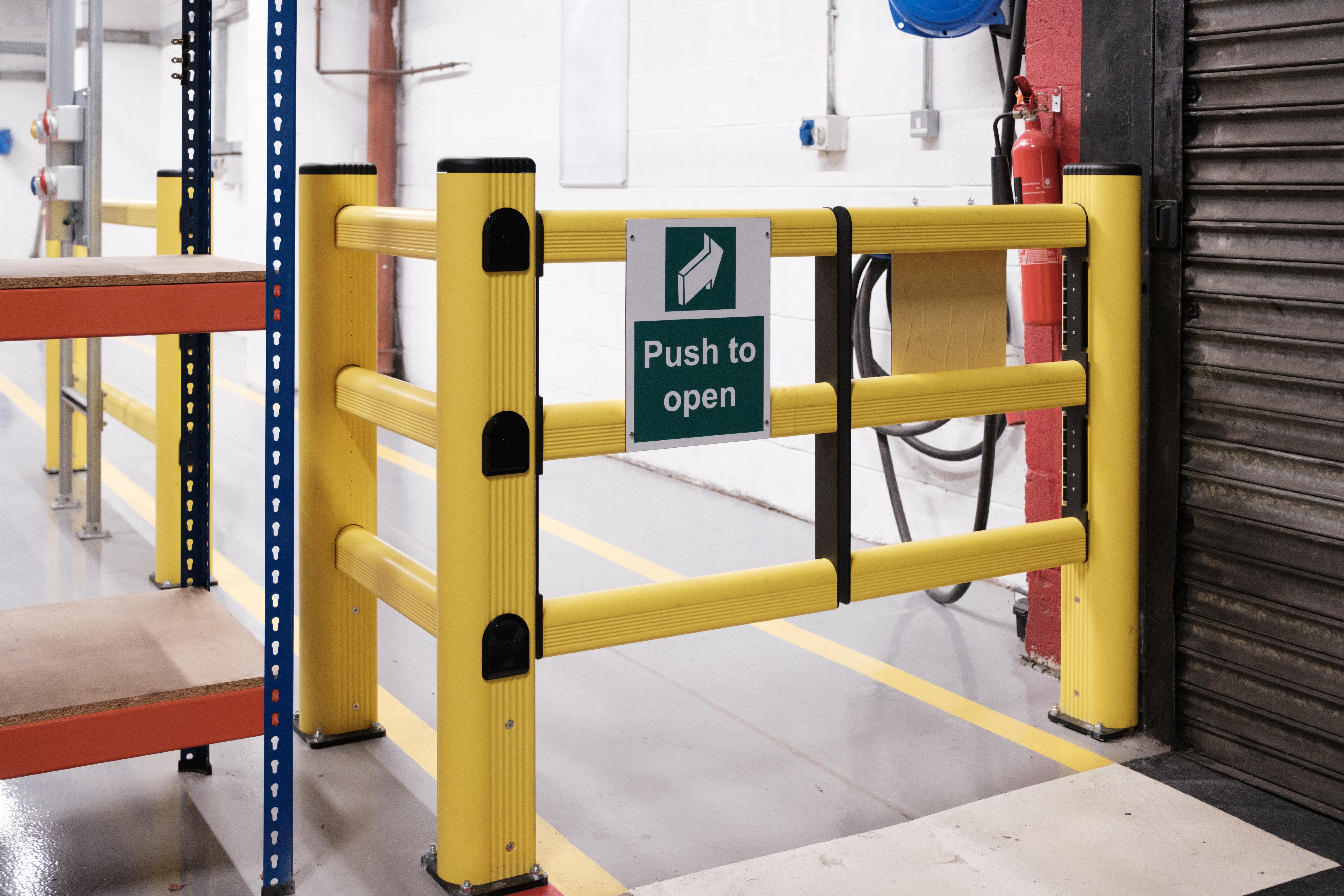
Polymer barriers work excellently for pedestrian protection. They're visible, they absorb impacts effectively, and they maintain protective function after being struck.
For asset protection priorities:
- Rack end protection to prevent forklift damage to racking systems
- Door frame protection for industrial roller shutters
- Column guards to protect building infrastructure
- Bollards for corners and protruding structures
Polymer rack protection and bollards handle these applications well. However, if you're primarily concerned with perimeter security or protection from deliberate ram raids, polymer barriers aren't designed for that scenario. That requires specialist hostile vehicle mitigation systems.
One common mistake we see - installing barriers everywhere without distinguishing between pedestrian protection zones and low-risk asset areas. Your budget goes further when you match protection level to risk.
When Should You Choose Something Other Than Polymer Barriers?
Honesty matters when safety is involved. There are scenarios where polymer barriers probably aren't your best option.
Consider steel barriers when:
- You operate in extreme industrial heat environments (foundries, glass manufacturing)
- Your vehicles regularly exceed 5 tonnes and operate at speed
- You have specific client or insurance requirements mandating steel
- Your site has corrosion control measures that prevent steel degradation
Consider bollards when:
- You need to protect specific point assets (building corners, doorways)
- Impact forces exceed what linear barriers can absorb
- Space constraints prevent installation of post-and-rail systems
- Protection needs to be highly visible from all angles
Consider loading bay protection systems when:
- Your primary risk is vehicles reversing off unprotected bays
- Dock leveller damage is a recurring issue
- You need to prevent HGV trailers from shifting during loading
- HSG136 loading bay guidance applies to your operations
Consider painted lines when:
- Vehicle speeds are very low (pedestrian-paced)
- Physical segregation isn't reasonably practicable
- You need temporary marking during layout trials
- Budget constraints genuinely prevent physical protection
That final point deserves emphasis. Painted lines aren't adequate protection in most environments with regular forklift traffic. Under the Workplace (Health, Safety and Welfare) Regulations 1992, employers must organise traffic routes to protect pedestrians. Lines alone rarely achieve that standard.
But in very low-risk environments - office corridors with occasional trolley traffic, for example - lines can be proportionate.
How Can You Make the Right Decision for Your Site?
The best barrier decisions start with site-specific assessment, not catalogue browsing.
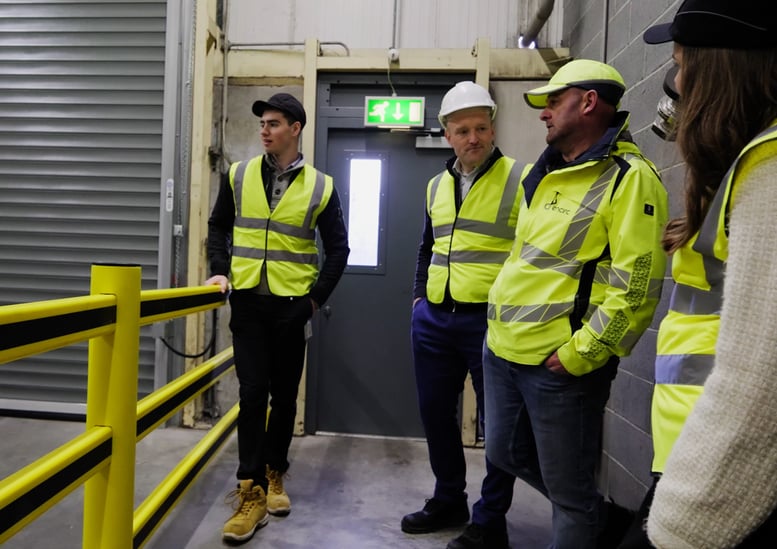
Walk your site during active operations. Watch how vehicles and pedestrians actually move, not how your traffic management plan says they should move. Identify the real conflict points, the near-miss zones, the areas where people take shortcuts.
Key assessment steps:
Map traffic patterns during all shifts. Night shift operations often differ significantly from day shift assumptions.
Identify your highest-risk zones. Where do pedestrians and vehicles interact most frequently? Where do visibility problems exist? Which areas have the highest impact frequency?
Understand your vehicle fleet specifications. What's the heaviest vehicle? What's the typical operating speed? Are vehicle weights or types changing as your business grows?
Review your floor condition honestly. Will it support proper barrier installation? Does it need repair work first?
Consider your operational timeline. Are layout changes planned? Is expansion likely? Will your segregation system need to adapt?
Document your findings. ISO 45001 and HSE guidance both emphasise documented risk assessment. Your barrier specification should follow logically from your risk analysis, not the other way around.
Most importantly, work with suppliers who ask questions before offering solutions. Any supplier suggesting barriers without seeing your site or understanding your operations isn't taking safety seriously.
At Clarity Safety, we begin with site assessment and traffic flow analysis before recommending any solution - polymer barriers, alternatives, or combinations. Sometimes the right answer is different protection in different zones.
Ready to Find the Right Protection for Your Site?
Contact our safety specialists for an honest site assessment. We'll identify your risks, discuss whether polymer barriers suit your environment, and recommend practical solutions that protect your people and your budget.