
 By
·
5 minute read
By
·
5 minute read
You've seen the impressive factory tours. The perfectly aligned workstations, the smooth material flow, the clear segregation. You look at your own facility wondering why your layout feels chaotic by comparison.
We get it. You're dealing with equipment that can't move easily, workflows that evolved over the years, and constant pressure to maintain production whilst improving efficiency. Every layout change feels like a major project.
We honestly feel that there's no universal 'perfect' factory layout to copy. But there are three fundamental principles that determine whether your layout supports or sabotages operations. This article shows you what matters, how to spot when your layout is holding you back, and practical ways to improve without shutting down production.
Contents:
- Why Do Most Factories Copy Layouts That Don't Work?
- What Are the Three Non-Negotiables Every Factory Layout Must Address?
- How Do You Know If Your Current Layout Is Working?
- What Happens When You Ignore Layout Fundamentals?
- Can You Improve Your Layout Without Major Disruption?
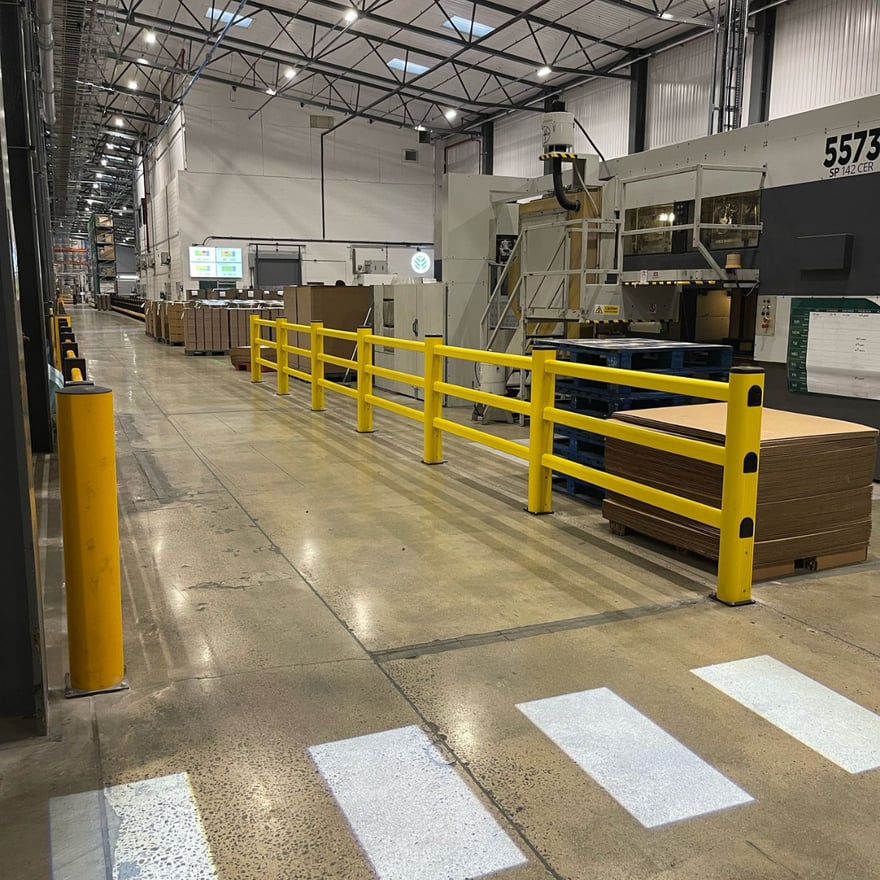
Why Do Most Factories Copy Layouts That Don't Work?
If a layout works for Toyota or Rolls-Royce, why wouldn't it work for you? The problem is context.
A cellular manufacturing layout that creates brilliant flow for high-volume, standardised products becomes a nightmare when you're handling low-volume custom orders. The U-shaped cells that enable one-piece flow create bottlenecks when batch processing is essential.
Someone visits an impressive facility, takes photos, and returns determined to replicate it. But they didn't see the demand patterns that justify the layout, the workforce skills that make it function, or the product characteristics that drive the design.
The biggest trap? Assuming your layout is permanent. Production volumes change. Product mixes shift. A layout designed for yesterday's reality becomes a straitjacket. This is where modular safety systems make the difference - they let you adapt as your business evolves rather than locking you into decisions made years ago.
What Are the Three Non-Negotiables Every Factory Layout Must Address?
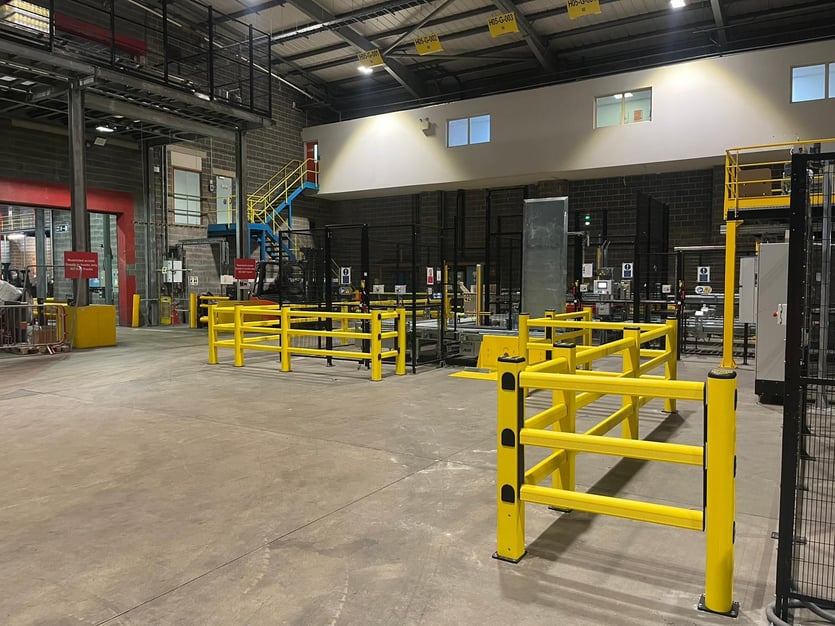
Regardless of what you manufacture, three fundamentals determine whether your factory layout supports or sabotages your business.
Safety Segregation That Meets HSE Standards
Your factory layout either creates safe separation between people and vehicles, or it forces them to compete for the same space. There’s no middle ground.
The Workplace (Health, Safety and Welfare) Regulations 1992 require that pedestrians and vehicles can circulate safely, with sufficient separation where they share routes. Compliance isn’t just about having barriers. It’s about positioning them where your workflow creates risk.
Watch your loading bays during shift changes. Observe blind corners where sightlines are blocked. Identify the pinch points where pedestrian routes cross forklift paths because your layout offers no alternative. These locations aren’t random - they’re designed into your facility by a layout that didn’t properly separate people from vehicles.
Painted floor lines depend on perfect behaviour. Physical segregation using barriers protects people when behaviour isn’t perfect - when a forklift driver misjudges a turn, when a new employee doesn’t know the safe route yet, when someone’s rushing to meet a deadline.
If you’re working with tight spaces where every metre counts, polymer barriers offer a slimmer profile than steel whilst maintaining impact protection. This becomes critical in congested areas where you need safety without sacrificing operational space.
View our range of polymer safety barriers.
Workflow Logic Based on Your Processes
Lean principles emphasise minimising movement, but that means different things depending on your operation. Job shops handling custom work need flexibility for different routings. High-volume manufacturing can justify dedicated cells with equipment positioned for single-piece flow.
Process-based layouts (grouping similar machines) create more transport but offer scheduling flexibility. Product-based layouts (cells by product family) reduce handling but require stable demand. You need to understand your actual patterns before choosing.
Adaptability for Future Changes
When barriers are welded in place and workstations bolted down, every layout change becomes a major project requiring downtime and budget approval.
Modular polymer barrier systems change this. Unlike steel barriers requiring cutting, welding, and floor damage to move, polymer systems reposition during maintenance windows. Your safety infrastructure adapts as production requirements evolve rather than constraining what you can do.
When BW Integrated Systems needed to reconfigure pedestrian walkways for new production lines, their modular barriers moved with them - no floor damage and no prolonged downtime. A layout that can adapt keeps you competitive. One that can't becomes an expensive liability limiting growth.
How Do You Know If Your Current Layout Is Working?
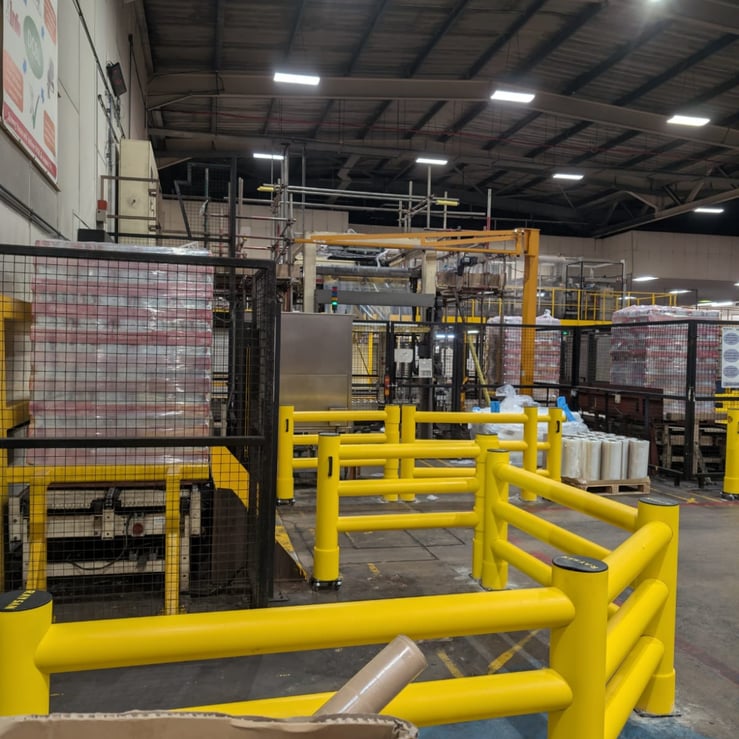
Most facility managers don't realise their layout is failing until something breaks: a serious accident, a bottleneck that kills a major contract, or a compliance audit that highlights poor practices.
There are earlier warning signs if you know what to look for.
Watch where people actually walk, not where your floor markings suggest they should walk. If workers are cutting across forklift routes or taking lengthy detours to avoid congestion, your layout is fighting against natural desire lines. People instinctively take the shortest safe route. When the official walkways force unnecessary distance, they'll find alternatives - often dangerous ones.
Count the near-misses. That moment when someone steps back and nearly collides with a forklift. The time when two vehicles almost meet on a blind corner. These incidents happen because your layout creates conflict points where people and vehicles compete for the same space at the same time.
Look at your work-in-progress inventory. Excessive WIP accumulating between processes usually signals layout problems. When material piles up, it's often because the physical distance between operations creates batching behaviour that wouldn't happen if the layout supported better flow.
Ask your forklift drivers about difficult manoeuvres. They know every awkward turn, every tight squeeze, every location where visibility is poor. These problem areas represent accidents waiting to happen and efficiency losses happening daily.
What Happens When You Ignore Layout Fundamentals?
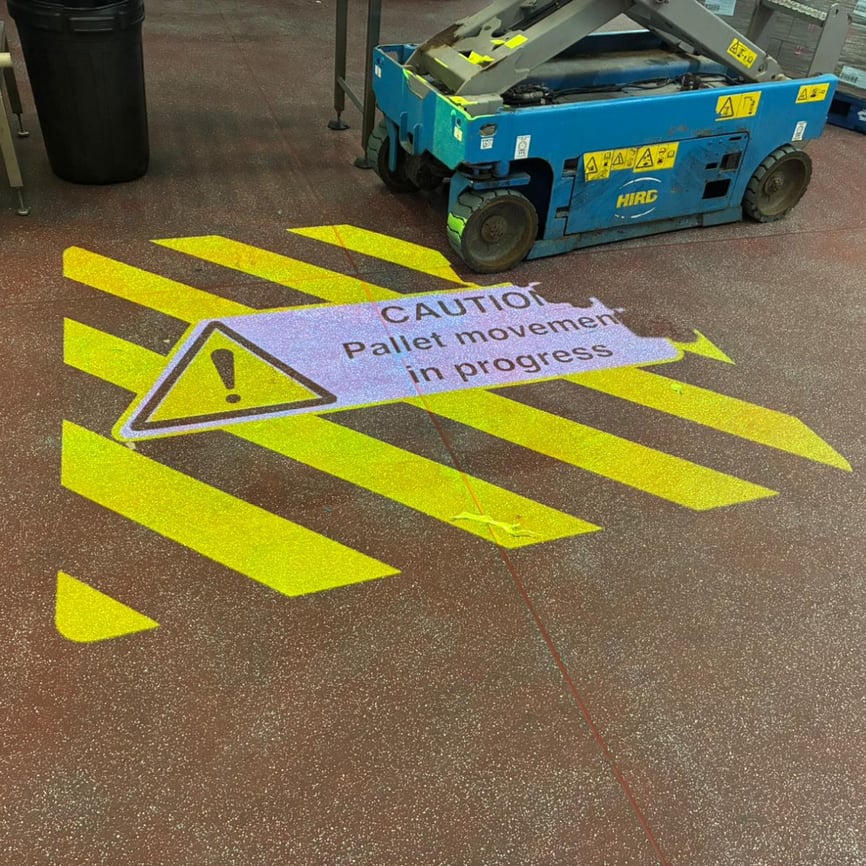
The costs of poor factory layouts compound over time. Small inefficiencies multiply across shifts, products, and years until you're losing significant margin to entirely preventable waste.
Start with safety. The HSE has made workplace transport a priority enforcement area. When an accident happens, the financial penalties are substantial. Recent prosecutions have resulted in fines exceeding £1 million, plus the immeasurable cost of the human impact. But even before a serious incident, inadequate segregation creates an environment where near-misses become normalised and complacency sets in.
Poor layouts drain productivity daily. Unnecessary movement is pure waste. Every metre a component travels unnecessarily represents time and energy that adds no value to your customer. When your layout requires extensive material handling, you're paying for transport labour, forklift maintenance, and the inventory carrying costs of work sitting in transit.
Then there's the opportunity cost. A layout that can't accommodate growth limits what you can bid for. When a major contract requires additional capacity but your layout can't support another production line, you're losing revenue because of avoidable constraints. Facilities with rigid, permanent installations face this problem repeatedly - they can't adapt quickly enough when opportunities arise.
Can You Improve Your Layout Without Major Disruption?
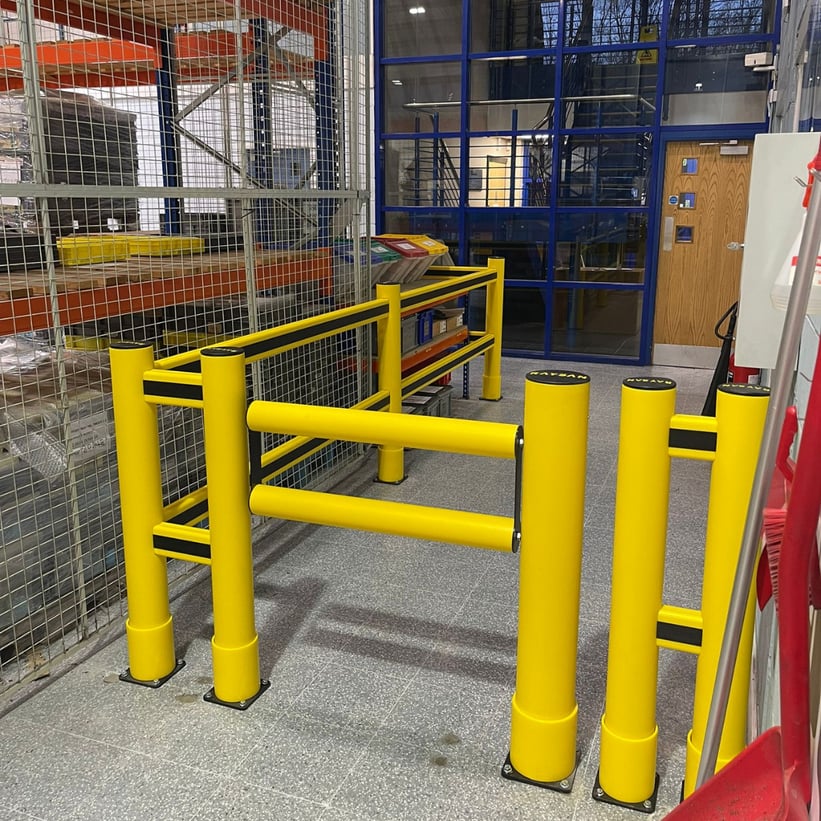
The assumption that layout improvements require shutting down production prevents many necessary changes. Modern approaches make incremental improvement possible without extended downtime.
Installing modular polymer barriers during scheduled maintenance windows creates immediate protection without production stops. Unlike welding steel barriers or cutting concrete for anchor points, polymer systems install in hours. When business needs change six months later, those barriers move to new locations without floor damage or specialist contractors.
For substantial changes, phase the work. Reconfigure one cell or zone at a time, validating improvements before moving to the next area. This reduces risk whilst building internal expertise. Modular safety systems make phased approaches practical - you're not locked into permanent decisions.
LED projected walkways offer another path. Because they're overhead installations that don't affect floor surfaces, you can implement them during live operations. Reprogramming them means testing different routing options quickly - far more practical than repeatedly repainting floors.
Match your implementation approach to operational constraints. Rush jobs forcing weekend working rarely deliver sustainable improvements. Thoughtful phased approaches create buy-in whilst minimising disruption.
If you're weighing up permanent installations versus modular systems, read the expensive truth about cheap warehouse segregation before making that decision.
Your Layout Should Work for Your Business
There is no universal 'perfect' factory layout. What exists is a set of principles: safety segregation meeting legal requirements, workflow logic matching your processes, and adaptability supporting future changes.
How you apply these depends entirely on what you make, how you make it, and where you're headed. Facilities that get this right understand their current reality before jumping to solutions. They design based on workflow patterns and demand, not theoretical ideals. And they choose modular safety systems that preserve flexibility rather than permanent installations that constrain future options.
At Clarity, we work with you to understand your specific challenges, map your workflows, and design segregation systems that protect your people whilst supporting operations.
Book a free on-site assessment and we'll help you identify layout improvements that fit your facility, your processes, and your budget.

-1.png)