 By
·
4 minute read
By
·
4 minute read
Most warehouse safety problems don’t start on the shop floor. They start in a conversation that goes something like: “We need to sort the barriers out – let’s just get some quotes in.”
We understand why. There’s pressure to move quickly, budget to justify, and a long list of other priorities competing for your attention. Skipping the assessment and going straight to procurement feels efficient. It rarely is.
In this article, we’ll show you what guessing costs – in rework, fines, wasted spend, and missed risk – and why a paid safety site survey is often the most financially sound decision a site makes before any installation begins.
Contents
- Why guessing your safety layout is more expensive than you think
- What does a site safety survey actually cover?
- What does it cost if you get it wrong?
- How do Clarity’s consultation packages work?
- Is a paid survey worth it?
Why Is Guessing Your Safety Layout More Expensive Than You Think?
There’s a common assumption that if you’ve walked your site a hundred times, you know where the risks are. The problem is that familiarity and expertise are not the same thing.
Pedestrian routes that look logical to the people who use them every day may create blind spots at FLT crossing points. A loading bay that feels “under control” may sit outside the scope of your current risk assessment. And a barrier you ordered based on a competitor’s spec may not be rated to the impact resistance required under PAS 13:2017.
These are not rare edge cases. They are patterns our team sees repeatedly, on sites of every size, across every sector.
The Management of Health and Safety at Work Regulations 1999 require employers to carry out suitable and sufficient risk assessments. If your layout decisions are based on assumption rather than documented assessment, you are not meeting that standard. And under the HSE’s Fee for Intervention (FFI) scheme, a material breach identified during an inspection carries a charge of £188 per hour for the time taken to address it.
What Does a Site Safety Survey Cover?
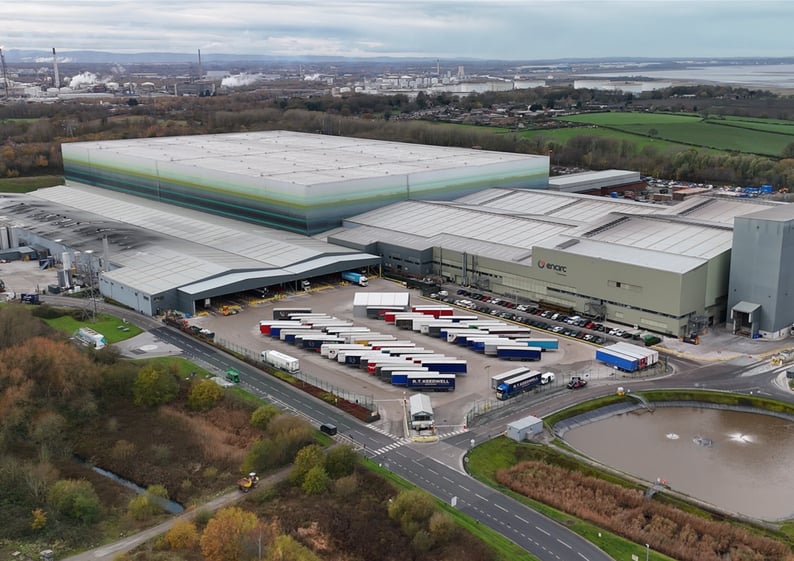
A proper site survey is not a sales visit. It is a structured assessment carried out by a qualified specialist with the specific goal of identifying risk, not selling product.
At Clarity, our surveys cover:
- Traffic flow mapping – how FLTs and pedestrians move through the facility, where their paths cross, and where segregation currently fails or is absent
- High-risk area identification – loading docks, crossings, narrow aisles, blind corners, and areas with high pedestrian density
- Barrier condition and compliance review – assessing whether existing installations are fit for purpose against PAS 13:2017 standards
- Documentation review – checking whether current risk assessments reflect actual operations
- Bespoke proposal and 2D/3D layout drawings – a site-specific plan rather than a generic recommendation
The output is a documented, actionable proposal that your team can take straight into project planning. It's not a brochure or a quote for the same barrier used on every other job.
What Does It Cost If You Get It Wrong?
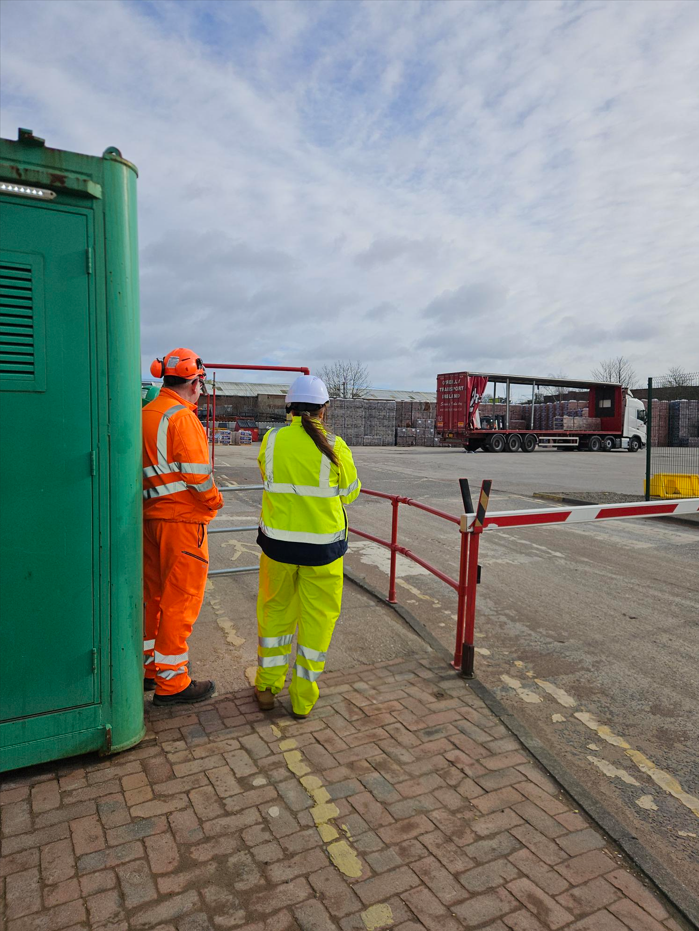
This is the question worth spending time on.
When a safety project is scoped without proper assessment, the consequences tend to follow a predictable path. Barriers are installed in the wrong locations. FLT crossing points are left unprotected because they weren’t mapped. Pedestrian walkways are laid out in ways that create new conflict zones rather than resolving existing ones.
When those issues surface – and they do surface, either through incident, near-miss, or inspection – the cost of putting them right is always higher than it would have been to get it right first time.
The financial exposure is significant. Under the Health and Safety at Work etc. Act 1974 and the Workplace (Health, Safety and Welfare) Regulations 1992, employers have a legal duty to maintain safe traffic routes and segregation.
An HSE prohibition notice stops operations immediately. An enforcement notice triggers FFI charges. A prosecution can result in fines running to hundreds of thousands of pounds, as demonstrated by several high-profile cases involving FLT and pedestrian incidents in recent years.
Beyond the regulatory risk, rework is expensive. Removing barriers that were installed in the wrong place, extending layouts that were under-scoped, and procuring additional product six months after the original order all carry cost that a thorough survey would have eliminated at the outset.
The cost of a site survey is not an additional line on your budget. In most cases, it is a reduction in your overall project spend.
How Do Clarity’s Consultation Packages Work?

We offer three tiers of paid consultation, designed to match the scale and complexity of your safety challenge.
|
Package |
Investment |
Best For |
|
Fix One Problem |
£149 |
Single specific safety concern |
|
Full Site Package |
£949 |
Wider pedestrian safety challenges |
|
Group Standard |
£7,549 |
Multi-site organisations |
Fix One Problem – £149
Designed for sites with a single, defined safety concern. A discovery meeting to uncover root cause, followed by a bespoke solution proposal and 2D product drawings. Focused, practical, and immediately actionable.
Full Site Package – £949
For wider pedestrian safety challenges across your facility. Includes a site visit, traffic flow analysis, high-risk area identification, stakeholder alignment, and both 2D and 3D concept drawings. This is a comprehensive assessment that gives you a clear picture of your whole site.
Group Standard – £7,549
For multi-site organisations that need to set a consistent safety standard across their estate. Includes a leadership alignment session, review of existing group HSE standards, and a framework for rolling detailed assessments across all sites.
Important: the consultation fee is credited back against any subsequent supply and installation order. If you proceed with Clarity for your project, the survey effectively costs nothing.
Is a Paid Survey Worth It?
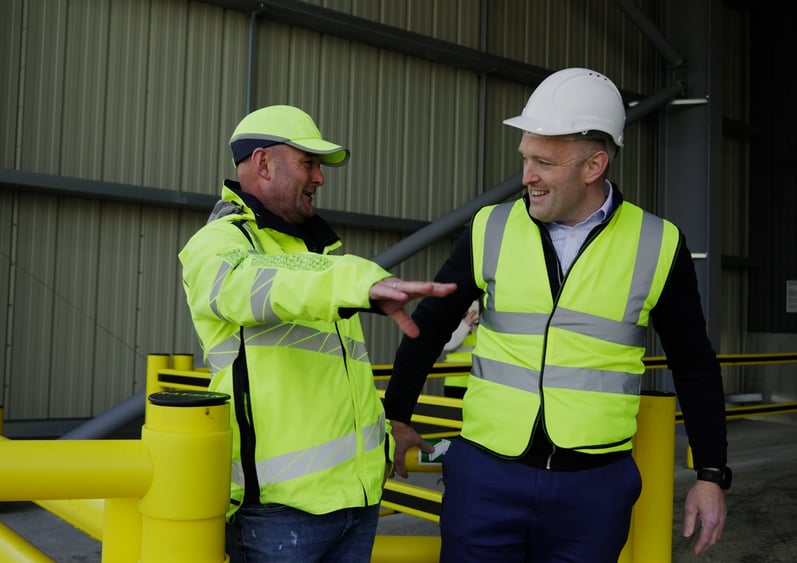
The short answer is that the question slightly misses the point.
A paid consultation is not a premium you are adding on top of your project. It is the stage that determines whether your project is scoped correctly in the first place. Skipping it does not save money – it defers cost and increases the probability of a more expensive problem later.
The sites that tend to see the most value are those where the survey surfaces something that wasn’t on anyone’s radar. A crossing point that had never been formally risk-assessed. A barrier specification that wasn’t appropriate for the FLT in use. A layout that created a new risk while solving the original one. These are not uncommon findings. They are the reason a structured assessment exists.
If you are serious about protecting your people and managing your compliance obligations, the survey is not the cost you are debating. It is the safeguard that makes everything else work properly.
Ready to See What a Survey Would Find on Your Site?
Start with a conversation. View our consultation packages and choose the tier that fits your challenge. The survey fee is credited back against your project – so there is no financial risk in finding out exactly where your site stands.