 By
·
4 minute read
By
·
4 minute read
When you're tasked with improving warehouse safety, one of the first questions you'll ask is: "What's this going to cost?"
It's a fair question. Budgets are tight, and every pound needs justification. But here's the problem - the upfront price tag rarely tells the full story. A £500 solution that needs replacing every few months costs far more than a £2,000 system that lasts a decade.
This guide breaks down the real cost of every major barrier option available to UK warehouses, from the cheapest to the most comprehensive. By the end, you'll know exactly what you're paying for at each price point - and which investment makes the most sense for your operation.
Contents:
What Does Each Barrier Type Cost?
Safety barrier pricing varies significantly depending on the type of protection you choose. Here's what UK warehouses typically pay:
Painted Floor Lines: Typical market cost: £2-5 per linear metre. Lifespan: May need repainting up to 6 times per year in high-traffic areas.
Floor Marking Tape: Typical market cost: £5-15 per linear metre. Lifespan: 6-12 months depending on traffic levels.
Steel Barriers: Typical market cost: £80-150 per linear metre (supplied and installed). Lifespan: 3-7 years before significant repairs or replacement are needed.
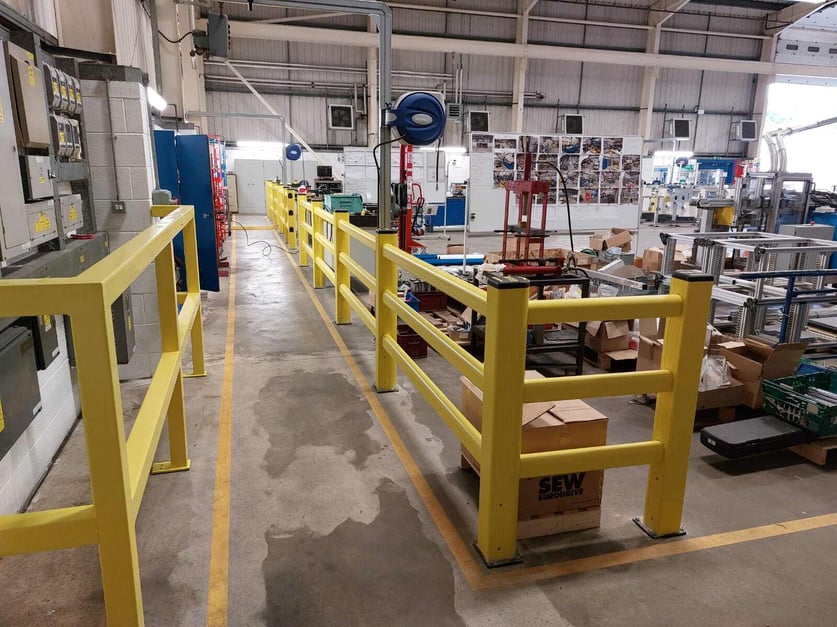
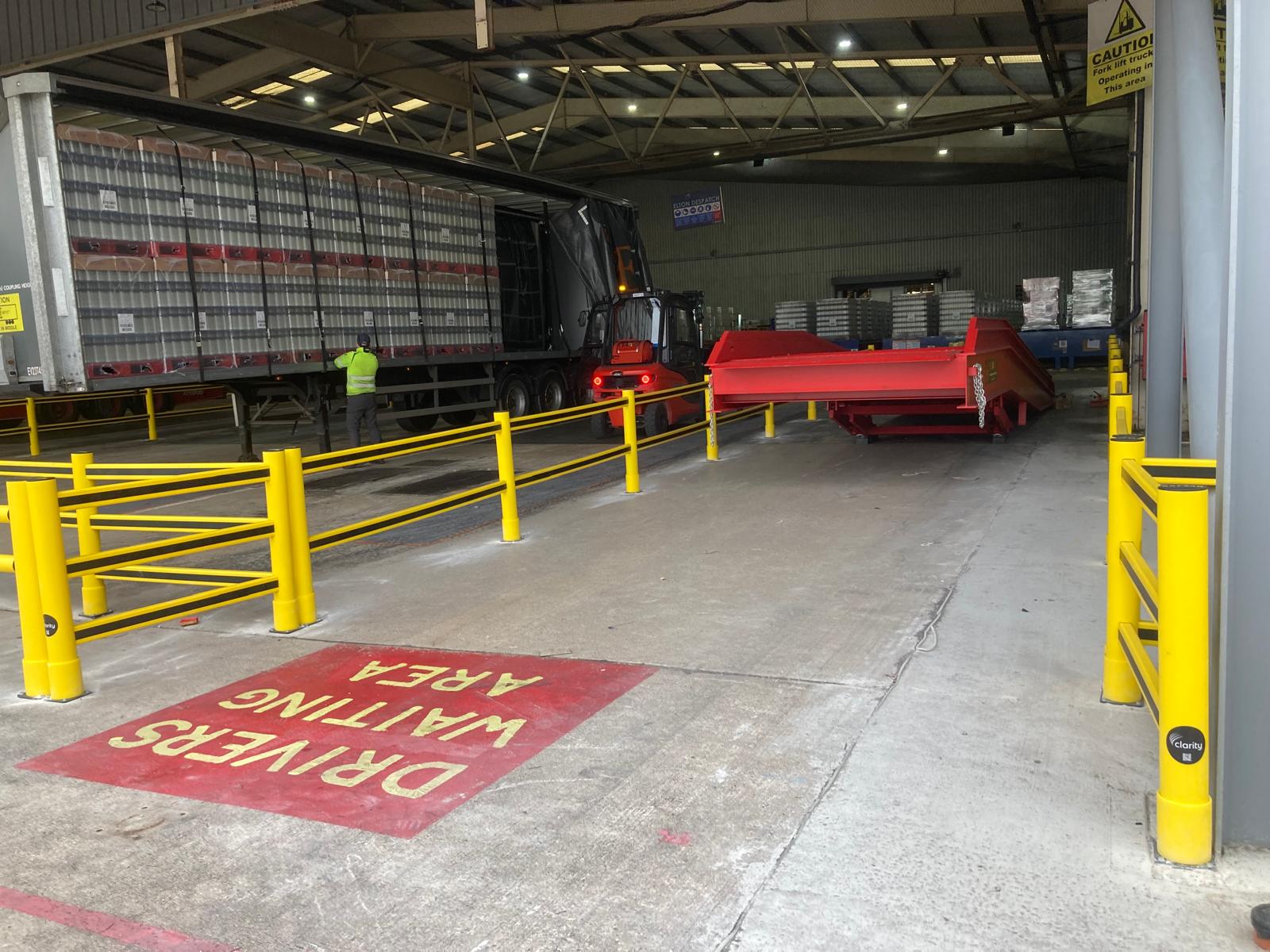
Polymer Safety Barriers: Clarity pricing: From £130 per metre (+ installation) Lifespan: 15-25 years with minimal maintenance.
LED Projected Floor Markings: Clarity pricing: From £800 per unit (+ installation) Lifespan: 5+ years (bulb replacement only).
These figures give you a starting point, but they don't account for what's actually included in each quote - or the ongoing costs that can dramatically change the picture.
How Should You Compare Safety Barrier Quotes?
Getting quotes is easy. Comparing them properly is harder. Prices vary wildly across suppliers, and the cheapest option on paper often hides gaps that cost you later.
Here's what to look for - and what to ask - before you commit.
Is the quote based on your actual site?
A supplier quoting from a floor plan or email description is guessing. The best quotes come from suppliers who've walked your facility, understood your traffic patterns, and seen where the real risks are.
If a quote arrives without a site visit or detailed consultation, treat it with caution. You might be quoted for barriers that don't suit your environment, or miss protection in areas you hadn't considered.
Ask: "Have you assessed our specific site, or is this a standard estimate?"
What testing data backs up the product?
Not all barriers are tested equally. Some suppliers quote impressive-sounding impact ratings without third-party verification. Others sell products with no documented performance data at all.
Look for testing to recognised standards. PAS 13:2017 is the British code of practice for safety barriers in workplace environments. Products tested to UNI/TR 11886 specification have been put through rigorous impact scenarios.
If a supplier can't provide test certificates or performance data, you're trusting marketing claims rather than proven results.
Ask: "Can you provide third-party test data and certificates for these barriers?"
What's actually included in the price?
A low headline figure often excludes essentials. Before comparing quotes, check whether each one includes:
- Delivery to site
- Installation by trained fitters
- Floor fixings and anchors
- Gates, corners, and end caps
- Post-installation inspection
- Design drawings or 3D visuals
A quote missing any of these will grow once you're committed. The supplier offering £18,000 "plus installation, fixings, and delivery" may cost more than the one quoting £26,000 fully fitted.
Ask: "Is this a fully installed price, and what's excluded?"
What happens after installation?
Cheap quotes rarely cover what happens when something goes wrong - or when your layout changes.
Check what support comes with the product:
- Is there a warranty, and what does it cover?
- Can you buy replacement parts easily?
- If you need to reconfigure barriers later, is that possible without replacing entire sections?
- Who do you call if there's a problem - and how quickly will they respond?
Clarity includes dedicated project management and ongoing customer support with every project. Not every supplier does.
Ask: "What after-sales support is included, and what's your typical response time?"
Does the quote address your compliance requirements?
If you're in a sector with specific safety or hygiene requirements - food manufacturing, pharmaceuticals, logistics - your barriers need to meet those standards.
Some questions to consider:
- Are the barriers suitable for wash-down environments?
- Do they meet hygiene standards for food-safe areas?
- Will they satisfy your insurance requirements?
- Can the supplier provide documentation for audits?
A quote that ignores compliance may leave you replacing barriers within months when an auditor flags them as unsuitable.
Ask: "How do these barriers meet our specific industry requirements?"
.jpeg?width=492&height=656&name=WhatsApp%20Image%202025-11-19%20at%2013.58.36%20(1).jpeg)
What Are the Red Flags with Budget Quotes?
Watch out for these warning signs:
- No site visit offered - they're guessing at your needs
- No testing data available - unverified performance claims
- Vague line items - "barriers" without specifications
- Installation quoted separately "TBC" - costs will rise
- No named contact - you'll struggle to get support later
- Pressure to sign quickly - good suppliers let you decide properly
The cheapest quote isn't a bargain if it doesn't actually solve your problem.
How Do the Numbers Stack Up Over Five Years?
Here's where the real cost picture becomes clear. This projection compares the ongoing costs of metal barriers versus polymer barriers over a five-year period:
| Cost Category | Metal Barriers | Polymer Barriers |
| Replacement of barriers due to impacts | £20,000 (2 x £10,000) | £,2000 |
| Repairs to floor where bolts are ripped out | £8,000 (2 x £4,000) | £0 |
| Repairs to forklift truck from impacts |
£13,000 (2 x £6,500) |
£0 |
| Cost of replacement damaged goods | £5,000 (4 x £1,250) | £0 |
| Painting and maintenance |
£2,500 (5 x £500) |
£0 |
| Cost of downtime from barrier repairs | £10,000 (5 x £2,000) | £3,000 |
| 5-Year Total | £58,500 | £5,000 |
The difference is stark. Metal barriers don't just cost money to maintain - they create knock-on costs across your operation. Damaged floors, damaged trucks, damaged stock, and lost productivity all add up.
Polymer barriers absorb impacts and return to shape, which means no replacements, no floor repairs, and no downtime. The only ongoing cost is basic maintenance.
Even factoring in a higher upfront investment for polymer, the five-year total cost of ownership is dramatically lower. We've illustrated this in our Metal vs Polymer Lifetime Cost comparison - it's worth a look if you're building a business case.
Ready to Find Out What Your Site Actually Needs?
At Clarity, we help UK warehouses make informed safety decisions based on real costs and genuine protection - not just upfront prices.
Our team can assess your facility, identify your highest-risk areas, and recommend solutions that protect your people and your budget for the long term. Every project includes visual designs or 3D graphics so you can see exactly what you're getting before installation begins.
Book a free site assessment and get a clear picture of what safety barriers will actually cost for your operation.