 By
·
5 minute read
By
·
5 minute read
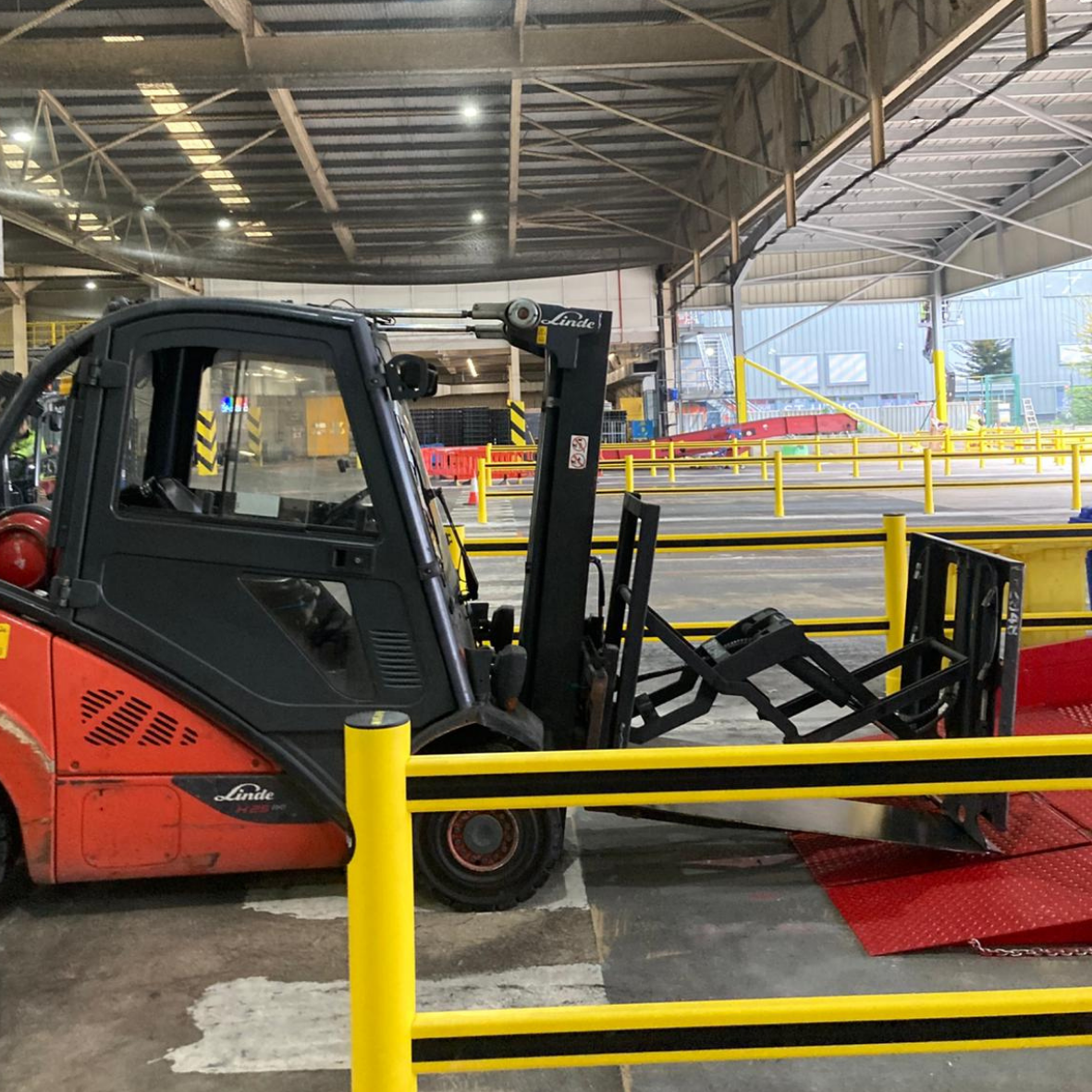
A barrier section takes an FLT hit on Tuesday morning. It's cracked, leaning, or no longer fixed to the floor. You know it needs replacing. You raise it with the team, log it in the system, and then you wait.
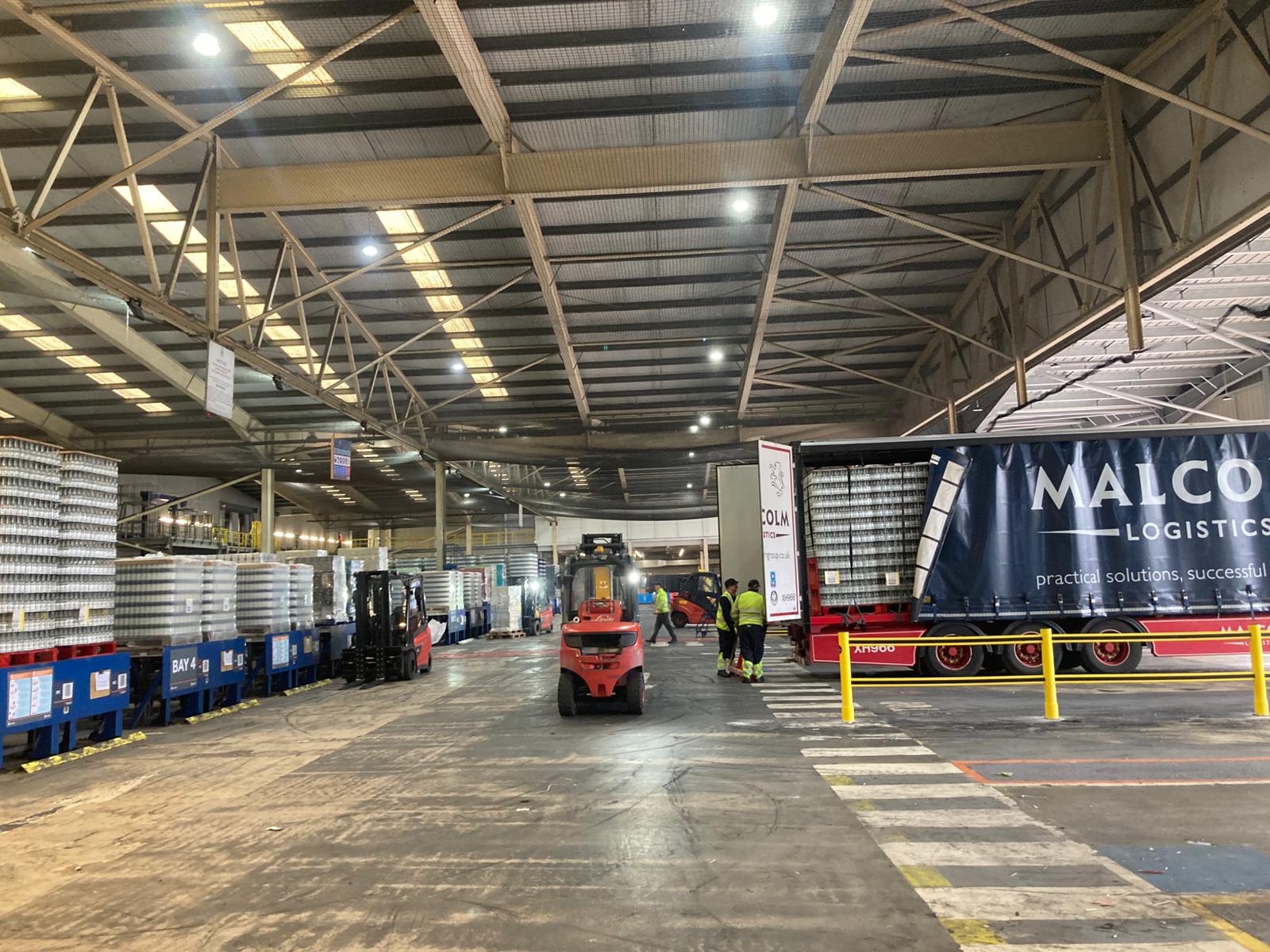
We often hear of a similar situation from sites across the UK. The barrier is damaged, the risk is significant, and the lead time from some suppliers stretches to three, four, sometimes six weeks. In the meantime, pedestrians are still using that route. Vehicles are still operating in the area.
In this article, we'll walk through exactly what that waiting period means from a legal and safety standpoint, what interim measures are and aren't sufficient, and why having access to small-quantity stock, from a supplier who can deliver quickly, changes the risk profile of every FLT collision on your site.
Contents
Why Is a Damaged Barrier Still a Live Risk?
.jpeg?width=781&height=586&name=WhatsApp%20Image%202026-03-16%20at%2008.06.39%20(2).jpeg)
There's a temptation to treat a damaged barrier as a maintenance issue rather than a safety issue. It's not.
The barrier was there because a risk assessment identified that pedestrians, materials, or machinery needed physical separation from vehicle routes. That risk didn't disappear when the barrier got hit. If anything, the collision itself is evidence that the hazard is real and active.
The moment an impact is documented in an incident log, a near-miss report, or a maintenance record, you have a written record of a known hazard and a compromised control measure. That record changes the picture significantly if anything goes wrong while you wait for replacement stock. You've acknowledged the risk exists. The question that follows, in any HSE investigation or post-incident review, is whether you acted on it quickly enough.
HSE inspectors assess sites against the principle of 'reasonably practicable' controls. A damaged barrier that's been logged but not addressed within a reasonable timeframe is a documented failure to act.
What Does the Law Say About Maintaining Physical Controls?
The Workplace (Health, Safety and Welfare) Regulations 1992 place a specific duty on employers to ensure traffic routes are organised so that pedestrians and vehicles can circulate safely. The obligation isn't to have barriers installed once, it's to maintain conditions where people are protected.
HSG136, the HSE's guide to workplace transport safety, reinforces that physical segregation is the most reliable means of keeping pedestrians away from vehicle routes. It doesn't make allowances for a period of reduced protection while waiting for replacement parts to arrive.
PAS 13:2017, the code of practice for safety barriers used in workplace environments, requires barriers to retain their stated performance specifications. A barrier that's been structurally compromised by an impact no longer meets that standard, regardless of whether it's still partially standing.
Being struck by a moving vehicle accounts for 16% of all fatal work-related injuries in Great Britain, with an average of 21 deaths every year over the past five years. These are not exceptional events in exceptional workplaces; the HSE's own analysis shows the same preventable failures appearing repeatedly across industries.
The legal picture is clear: a gap in physical protection is not a gap you want to document without evidence of swift action.
Why Can't You Just Log It and Wait?
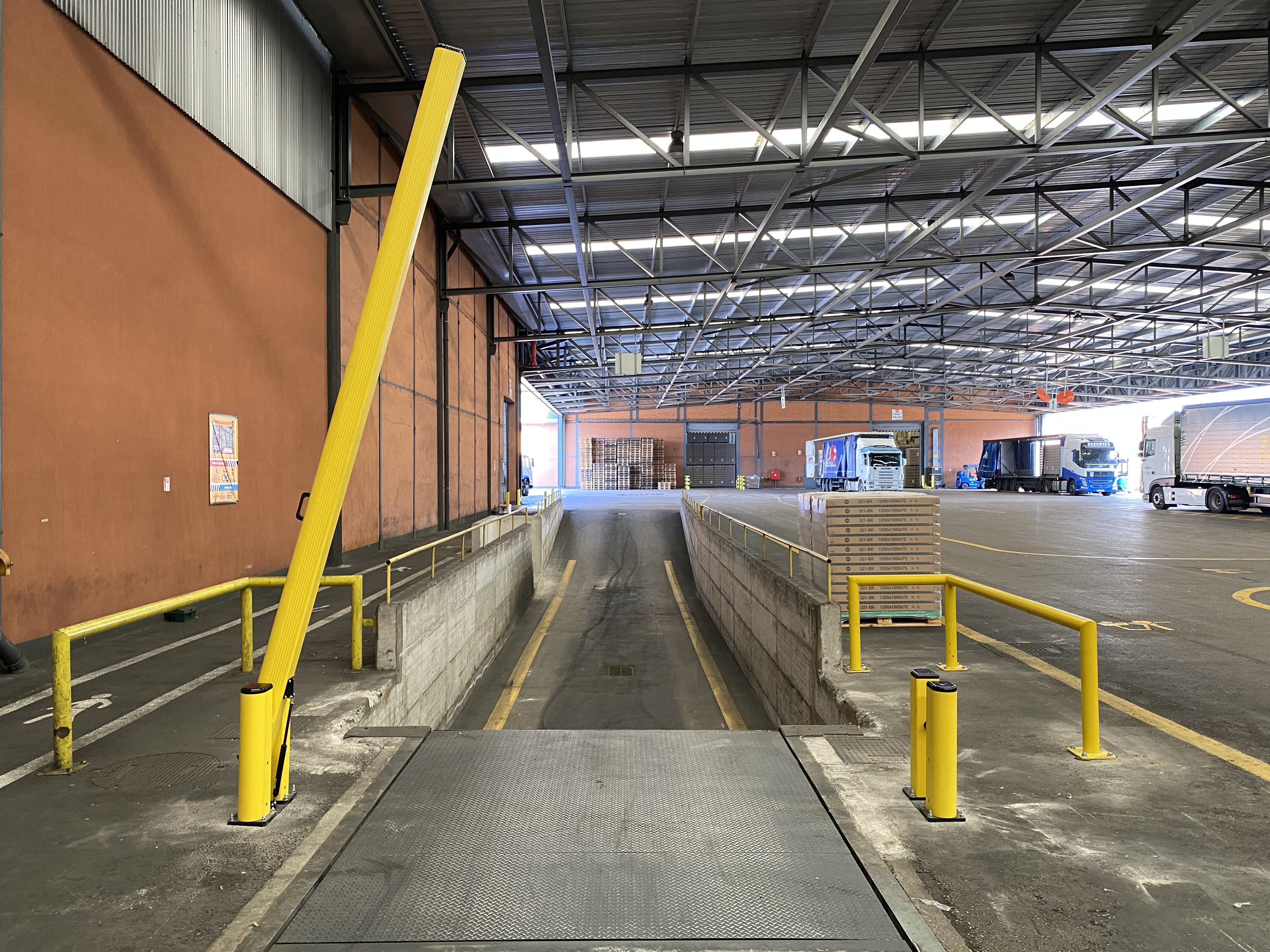
Logging the damage is the right first step. But logging it and waiting several weeks for stock to arrive puts you in a difficult position if anything goes wrong in the interim.
The core issue is this: once a hazard is identified and documented, the standard of care required increases. You've acknowledged the risk exists. The question is whether you acted on it quickly enough.
Long lead times from some suppliers create a compliance window where you're operating a site that you know has a safety gap. That's a very different situation from one where the damage was unknown.
This is where the nature of your barrier system and your supplier relationship becomes a practical safety consideration, rather than a procurement one.
What Interim Measures Are and Aren't Sufficient?
We're often asked what can be done in the gap between a barrier being damaged and a replacement arriving. The honest answer is that interim measures have limits, and most of the ones people default to are weaker than they appear.
Tape and cones
These offer no impact protection and deteriorate rapidly in an active warehouse environment. They're better than nothing for marking a hazard, but should never be treated as a substitute for physical segregation.
Rerouting pedestrian traffic
This can be effective if the alternative route is genuinely safe and clearly communicated to every person on site, across every shift. In practice, desire lines (the paths people naturally take) are hard to redirect. And if an alternative route isn't formally risk-assessed and physically demarcated, it may simply create a new hazard rather than eliminating the original one.
Supervisor monitoring
Human monitoring is fallible and unsustainable. It's appropriate as an immediate response in the first hour after an incident, not as a week-long safety strategy while waiting for parts.
None of these measures replace a physical barrier. They reduce risk marginally. A replacement section that arrives within days, rather than weeks, is the only resolution that closes the gap.
For a broader look at how sites manage pedestrian safety during layout changes and infrastructure updates, our guide on keeping pedestrians safe in narrow warehouse aisles covers the principles in detail.
Why Modular Polymer Systems Make Emergency Repairs Far Simpler
.jpeg?width=604&height=805&name=WhatsApp%20Image%202026-03-19%20at%2016.09.12%20(2).jpeg)
The design of your barrier system determines how quickly it can be repaired after an impact. This is often overlooked when sites specify their original installation.
Steel barriers, particularly custom-welded installations, are effectively irreplaceable in the short term. Repairing them requires fabrication, welding, often floor repairs, and specialist contractors. None of that happens in two days.
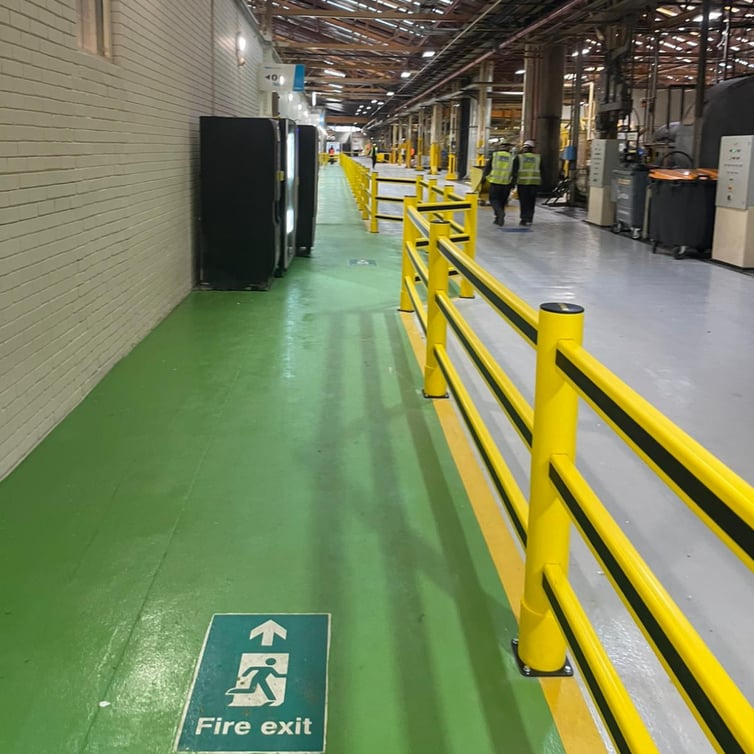
Modular polymer systems work differently. The post-and-rail design means individual sections can be swapped without replacing the whole run. Posts stay in the floor. Damaged rails slide out and new ones go in. No specialist tools, long curing times, or contractor visits required for a straightforward section replacement.
Clarity's modular polymer barriers use an interlocking system specifically designed so that damaged components can be isolated and replaced without affecting the sections either side. One FLT impact to a single bay doesn't mean an extended section of your walkway is unprotected while you wait for a full system repair.
The material itself also behaves differently on impact. Modified PVC polymer absorbs and dissipates force rather than bending permanently. In many lower-speed collisions, barriers deflect and return close to their original position. Higher-speed impacts damage the section that took the hit rather than propagating damage along the run.
For sites that are considering polymer barriers for the first time and want to understand whether they suit the environment, our article on how to know if polymer barriers are right for your site covers the key questions.
Can You Order Small Quantities for Emergency Fixes?
It's a practical question, and one that most barrier suppliers don't answer clearly on their websites.
Many manufacturers and distributors operate on a project-volume model. Their pricing, their logistics, and their minimum order quantities are structured around large installations. Ordering two replacement rails and a corner post to fix a single damaged section isn't a transaction their model is built around.
We've built our supply model differently. Clarity holds UK stock of our core barrier components specifically so that sites can order small quantities for emergency repairs without the delay or the minimum-order friction that comes with a bespoke project order. That means replacement rails, posts, end caps, and fixings are available for fast dispatch, not on a six-week manufacturing lead time.
If you're specifying a new system and want confidence that emergency replacements will be available when you need them, this is a question worth raising directly with your supplier before you commit.
What Should Be in Place Before the Next Impact?
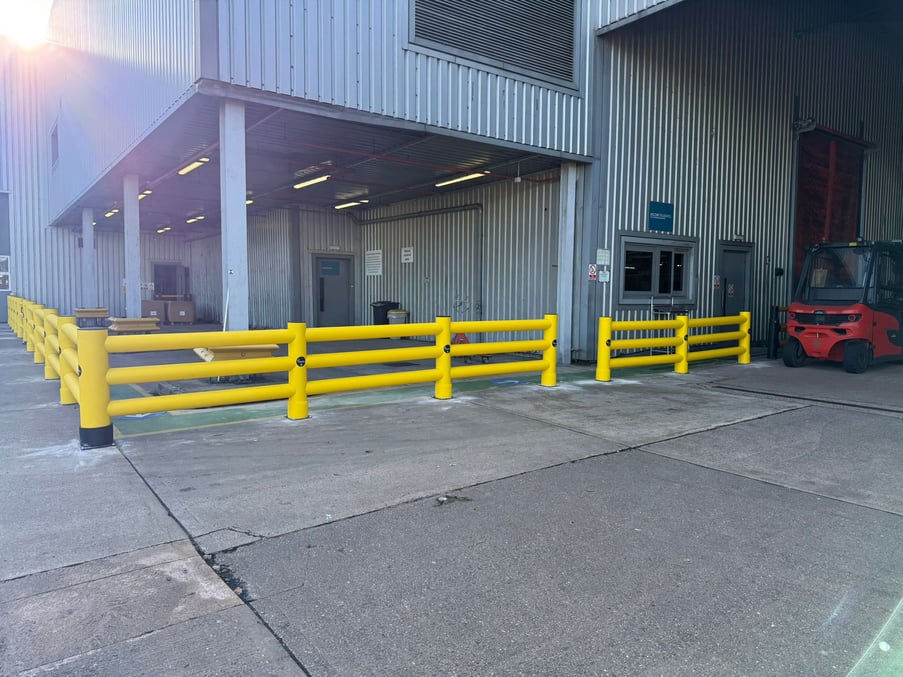
FLT collisions with barriers are not exceptional events. In an active warehouse, they do happen. Treating them as a problem to solve after the fact is always going to leave you in the position of managing a safety gap.
There are three things that make a real difference to how quickly a site recovers from barrier damage:
First, your barrier system needs to be modular. If sections can't be swapped independently, every impact is a major repair. If they can, most impacts are a quick fix.
Second, you need a supply relationship with a supplier who can move small quantities quickly. That means asking the right questions before you specify: what's the lead time on a single replacement section? Is the stock held in the UK? Can you order component-level parts, or only full system packages?
Third, you need a documented response procedure. When a barrier gets hit, who logs it, who orders the replacement, who authorises interim measures, and what's the acceptable timeframe for reinstatement? Having that on paper means the response is consistent across shifts and managers, and it demonstrates to the HSE that you treat damaged controls as a priority, not a backlog item.
If a barrier section on your site took a hit tomorrow, could you get a replacement within days? Talk to us about our UK stock availability and small-quantity orders.