 By
·
6 minute read
By
·
6 minute read
Nobody is struck by a moving vehicle while standing about doing nothing. In almost every case that reaches the Health and Safety Executive, the person on foot was doing a job that required them to be exactly where they were.
That is the uncomfortable part for anyone responsible for a warehouse or a yard. You can brief your team properly, mark your internal walkways and still have someone working within arm's reach of a moving vehicle several times an hour, because the task asks them to be there.
This article looks at where struck-by incidents happen in warehousing and logistics, which routine jobs create the exposure, and what a recent prosecution shows about the gap between having a traffic management plan and having one that works.
Contents
- How Many Workers Are Struck by Moving Vehicles in Great Britain?
- Why Did a Traffic Management Plan Fail to Prevent a Serious Injury?
- Which Everyday Jobs Put People on Foot Beside Moving Vehicles?
- Why Do So Many Incidents Happen at the Loading Bay and in the Warehouse Yard?
- What Controls Reduce Struck-By Risk at the Vehicle Interface?
- What Does UK Law Require?
- Frequently Asked Questions
How Many Workers Are Struck by Moving Vehicles in Great Britain?
HSE published its latest fatal injury figures on 1 July 2026. They record 126 worker deaths in Great Britain across 2025/26, and 24 of those workers were struck by a moving vehicle.
That makes being struck by a moving vehicle the second most common kind of fatal accident at work, behind falls from a height and now ahead of being struck by a moving object.
|
Struck by a moving vehicle in Great Britain: the figures
|
The year-on-year move needs care. The 2024/25 figure was 14, so 24 reads like a spike. HSE is clear that fatal injuries are rare events carrying natural variation, which is why it publishes a five-year average alongside the annual count. That average is 22 deaths a year. The honest reading is that 2024/25 was an unusually low year, not that the risk changed overnight.
The sector picture is where it sharpens. Across all industries, being struck by a moving vehicle causes around 17% of worker deaths. In transportation and storage it causes 30%. That sector's fatal injury rate of 0.94 per 100,000 workers sits around two and a half times the all-industry rate of 0.37.
And the number that matters most for site design is this one. Nearly a quarter of all deaths involving workplace transport happen during reversing.
Why Did a Traffic Management Plan Fail to Prevent a Serious Injury?
.jpeg?width=843&height=474&name=WhatsApp%20Image%202026-05-19%20at%2007.05.23%20(1).jpeg)
On 26 September 2024, a 43-year-old yard operative at Streamline Shipping Agencies Limited in Aberdeen was unclipping the curtain side of an articulated trailer. A colleague reversed an FLT. The rear nearside wheel caught his right leg and pulled him to the ground.
He suffered multiple fractures to his right foot and lower leg, along with a de-gloving injury. Two operations and skin grafts followed. He has needed counselling and has not returned to work.
The company pleaded guilty to breaching Regulation 17(1) of the Workplace (Health, Safety and Welfare) Regulations 1992 and Section 33(1)(c) of the Health and Safety at Work etc. Act 1974. At Aberdeen Sheriff Court on 22 May 2026 it was fined £146,700 with an £11,000 victim surcharge.
Here is the detail worth pausing on. Streamline had a traffic management plan. HSE found it did not contain the detail needed to ensure loading and unloading could be carried out safely. Inspector Nicky Smith made the point directly, saying a traffic management plan is not enough if it lacks the detail to protect workers on the ground.
Source: Shipping company fined £146,700 after worker seriously injured by forklift truck
Which Everyday Jobs Put People on Foot Beside Moving Vehicles?
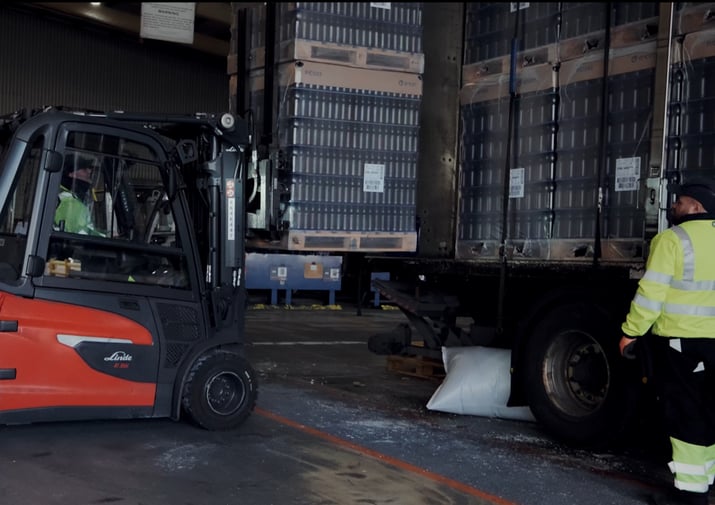
When I walk a site with a client, this is something we put a lot of focus on. Not where people are permitted to walk, but where the work makes them stand.
- Unclipping, pinning and re-securing curtain sides
- Strapping and unstrapping loads, and collecting straps and chocks afterwards
- Checking a load, a seal or a temperature reading before departure
- Banksman and marshalling duties during reversing
- Handing over or signing paperwork at the vehicle
- Clearing spillage or packaging waste in a live bay
- Visiting drivers walking from the cab to reception across an unfamiliar site
Not one of those is a shortcut. Not one is someone ignoring a rule. They are the job. That is exactly why briefings and reminders have limited reach here. You cannot brief somebody out of a task you still need them to carry out.
So the question is not how to stop people being near vehicles. It is whether they can carry out their work with the risk minimised as low as reasonably practicable.
Why Do So Many Incidents Happen at the Loading Bay and in the Warehouse Yard?
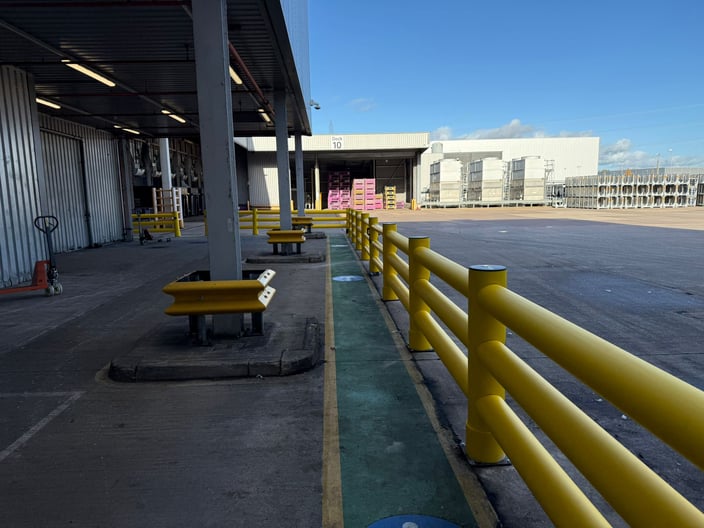
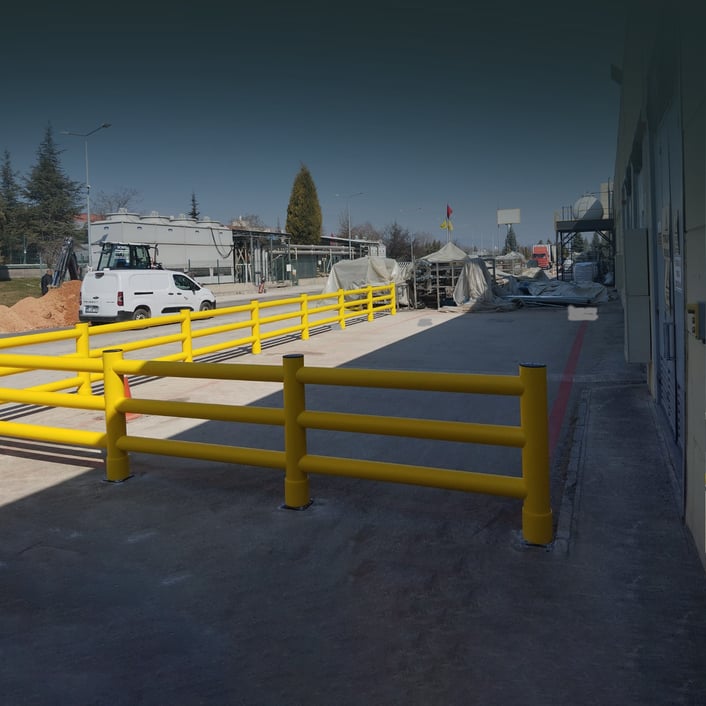
Most segregation effort goes inside the building. Aisles get barriers, walkways get marked, crossings get controlled. But the outside needs just as much focus.
Past that line, several risk factors stack up together.
- Concurrent operations. Loading and unloading running at the same time in the same space, with people on foot moving between the two.
- Reversing. The single manoeuvre behind nearly a quarter of workplace transport deaths is concentrated in exactly this zone.
- Unfamiliar drivers. Visiting HGV drivers do not know your layout, your crossing points or your site rules, and they are frequently the ones on foot at the trailer.
- Weather and light. Yards are exposed. Rain, low winter sun and early darkness all reduce what a driver can see from the cab.
- Surfaces that resist marking. Wet, oily or worn concrete is where paint and tape fail first, so the yard often ends up the least marked part of a site despite carrying the highest risk.
The pattern is consistent enough that we treat the loading interface as its own zone during a site assessment, rather than as the tail end of the internal plan.
What Controls Reduce Struck-By Risk at the Vehicle Interface?
.jpeg?width=759&height=569&name=WhatsApp%20Image%202026-06-24%20at%2012.52.30%20(6).jpeg)
HSE guidance starts by removing the need for reversing altogether, using one-way systems and drive-through loading and unloading positions. Where reversing cannot be avoided, reversing areas should be planned and clearly marked, and anyone who does not need to be there kept well clear.
On site, that comes down to four questions.
Can the movement be designed out?
One-way flow and drive-through bays remove the highest-risk manoeuvre before any other control is needed.
Where do people stand?
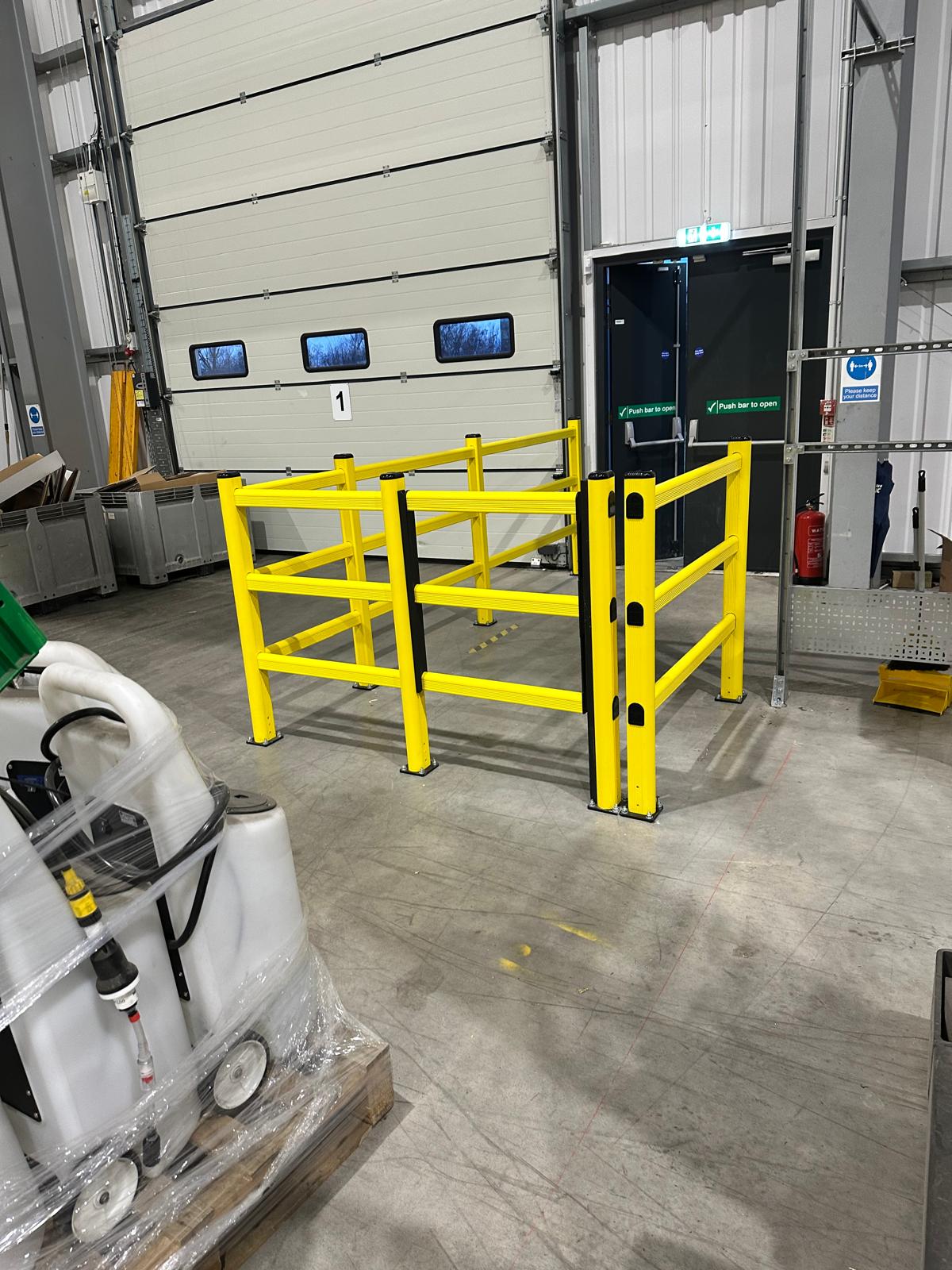
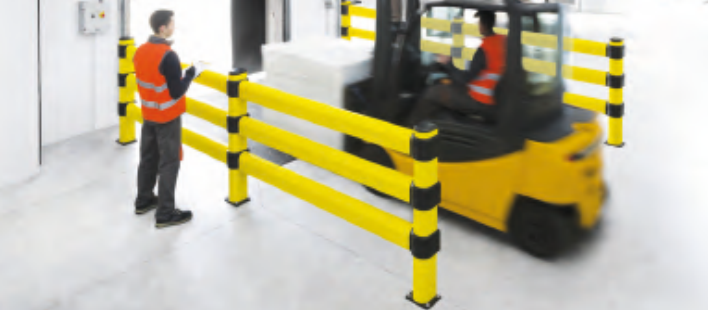
Every task on your list needs a defined position a vehicle physically cannot reach. Polymer safety barriers suit this because they flex on impact rather than transferring the force into floor fixings or into whoever is stood behind them. Loading bay protections do the same job around bay edges, doors and roller shutters.
How do people cross?
Pedestrian safety gates stop somebody at the threshold and prompt a look before they step into a vehicle route. On busy external crossings, a controlled priority crossing takes the guesswork away from driver and pedestrian alike.
Can it be seen in the conditions you actually have?
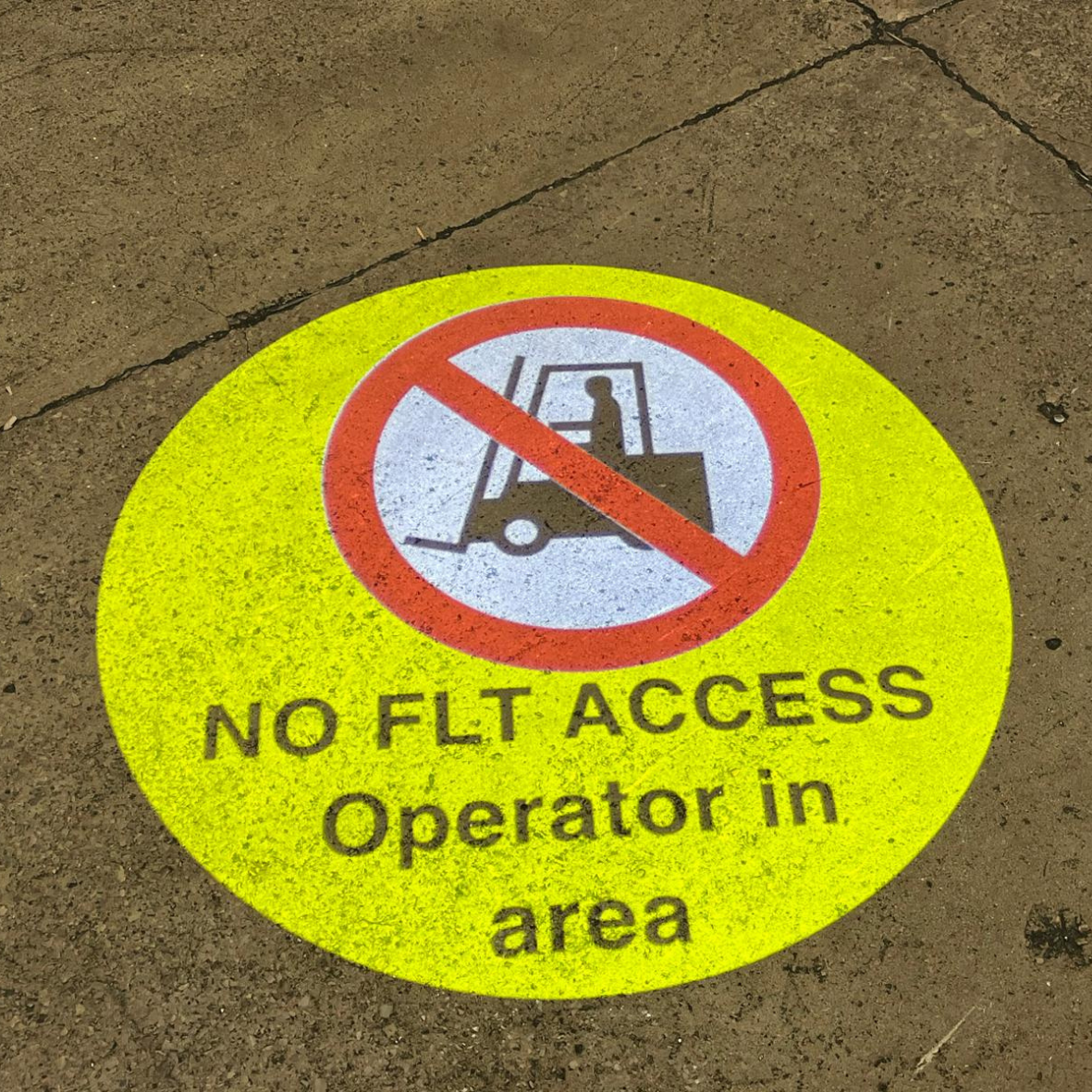
This is where LED projected floor markings earn their place. A projected image does not wear off under trailer tyres, does not lift in the wet and stays legible in low light. FLT warning projections put a vehicle's presence on the ground ahead of it.
What Does UK Law Require?
Regulation 17 of the Workplace (Health, Safety and Welfare) Regulations 1992 requires every workplace to be organised so that pedestrians and vehicles can circulate safely. That is the regulation Streamline was convicted under.
Sitting above it, Section 2 of the Health and Safety at Work etc. Act 1974 places a general duty on employers to ensure the health and safety of employees so far as is reasonably practicable, and Regulation 3 of the Management of Health and Safety at Work Regulations 1999 requires a suitable and sufficient assessment of the risks.
HSG136 Workplace Transport Safety sets out what HSE expects in practice, built around safe site, safe vehicle and safe driver. A plan that names those three headings without describing how loading and unloading are kept clear of people on foot is the plan Streamline had.
FAQs:
What does struck by a moving vehicle mean in HSE statistics?
It covers workers hit, run over or crushed by a vehicle moving within a workplace, including FLTs, HGVs and vans. Road traffic collisions on public roads are recorded separately.
Is a traffic management plan a legal requirement in the UK?
No regulation names a traffic management plan as such. Regulation 17 of the Workplace (Health, Safety and Welfare) Regulations 1992 requires safe circulation of pedestrians and vehicles, and a documented plan is how most sites demonstrate they have achieved it.
How many workers are struck and killed by vehicles in the UK each year?
HSE recorded 24 such deaths in Great Britain in 2025/26, out of 126 worker fatalities in total. The five-year average is 22 deaths a year, around 17% of all worker deaths.
What is the most dangerous vehicle manoeuvre in a warehouse?
Reversing. HSE attributes nearly a quarter of all deaths involving workplace transport to reversing manoeuvres.
Where do most struck-by incidents happen on a warehouse site?
At the vehicle interface: loading bays, yards and the space immediately around trailers, where people on foot and moving vehicles share ground during loading and unloading.
If you already know which tasks put your people beside moving vehicles, the next step is working out whether the site protects them. Our two-minute factory safety quiz is a quick way to test that yourself, and a site assessment takes it further, zone by zone, including the yard.
About the Author
Merryl Simpson is Clients & Project Manager at Clarity Safety. He runs every project from the first site visit to final handover, coordinating site walks, drawings, installation and aftercare. That means he sits in on pedestrian and vehicle segregation decisions at the point they are made, and sees which controls hold once a site is live, not just which ones look right on a drawing.
Connect with Merryl on LinkedIn