 By
·
5 minute read
By
·
5 minute read
Walk a warehouse or manufacturing facility six months after a 5S launch and you can usually tell within a minute whether it's been successful. The shadow board either has clean outlines with a tool hanging in each one, or it has three empty silhouettes and a pair of snips left on the bench beside it.
Nobody decides to let it slide. The launch goes well, the photos look good, and then a busy fortnight arrives and the board stops being the first place tools go back. By month six the difference between the sites that keep it up and the ones that don't is obvious to anyone walking through.
The more useful question is not why 5S fails. That ground is already covered. It is what the sites still using their visual system at six months did differently. Across the warehouses and factory floors I deal with, the pattern is fairly consistent, and very little of it comes down to discipline.
|
In short: Sustaining visual management six months later means the standard is still visible on the floor without anyone chasing it: tools returned to marked places, floor markings still legible, boards showing current numbers, and the odd gap corrected within a shift rather than left for a monthly audit to find. |
Contents
What Is Different Six Months Into a 5S Programme?
.jpg?width=757&height=505&name=Owen%20Mumford%206S%20board%20(J).jpg)
The systems that are successful share a set of signals you can see on a walk-through. In the sites where visual management is still working six months in, you tend to find:
- Every tool has an outline, and the outlines are still full. Missing tools stand out immediately because the empty shape is doing the work.
- Floor markings are still readable. Where markings are projected rather than taped, there is nothing to peel, scuff or re-tape, so the lines look the same as the day they went in.
- The boards show this week, not launch week. Numbers are current, and a blank board gets noticed because the habit of filling it never broke.
- Temporary fixes did not become permanent. The cardboard tray from month two has been replaced, not absorbed into the layout.
- Corrections happen in minutes, not during audits. A tool in the wrong place gets moved back on the next pass, because the wrong place is visibly wrong.
Where a system is slipping, the same walk around shows the opposite: part-empty boards, a line of tape lifting at the corner, a shadow board with more gaps than tools, and a cluster of items that have no home and so end up wherever there is space.
Why Does the Environment Matter More Than Willpower?
The sites that sustain 5S are not staffed by more disciplined people. They have built an environment where the correct state is the obvious state, so keeping it right takes less effort than letting it slip.
A foam cut-out with a spanner missing is not a rule anyone has to remember. It is a gap you can see from across the bay. A projected floor line cannot be worn away by pallet traffic, so nobody has to decide whether this is the week to re-tape it. A performance board positioned where the team already stands for the morning handover gets read because it is in the path, not because attendance is enforced.
This is the difference between a system that relies on people choosing to comply and one that makes the right action the path of least resistance. The first depends on attention holding steady for months, which it rarely does once pressure arrives. The second holds up because the floor itself flags anything out of place, and a visible gap is far harder to ignore than a line on an audit sheet.
Which Design Decisions Decide Whether It Lasts?
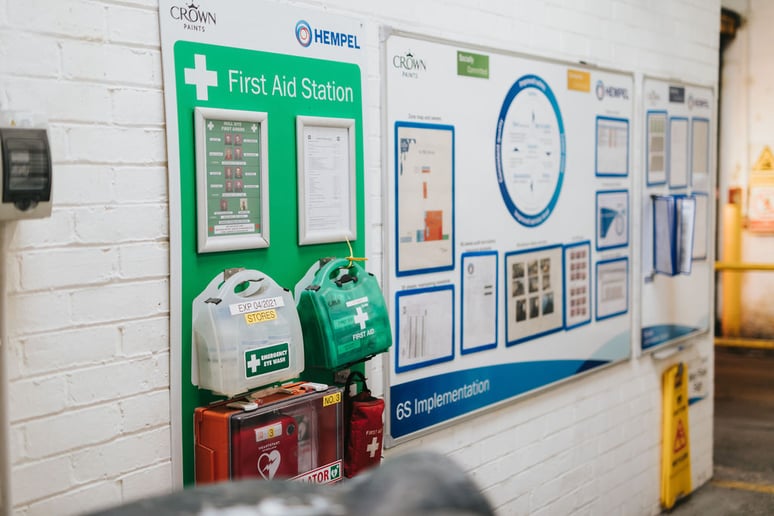
Most of whether a visual system survives is set at installation, long before month six.
- Marked places beat labels. A shadow board or foam cut-out shows a missing item at a glance. A printed label tells you where something should go only if you already went looking. For anything that leaves its home and comes back through a shift, the outline does more work than the words.
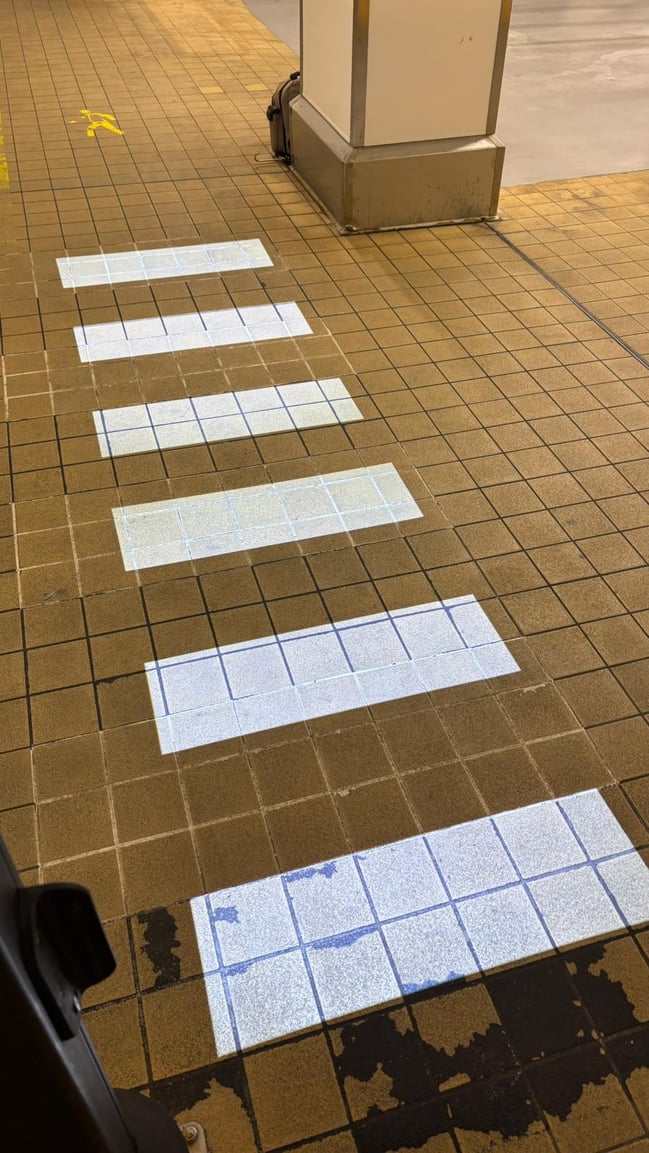
- Projection beats tape for anything in a traffic path. Taped and painted lines in busy routes lift and fade, and the moment they look worn the standard starts to look optional. LED projected floor markings have nothing to peel or replace, which removes the slow decay that undoes so many launches.
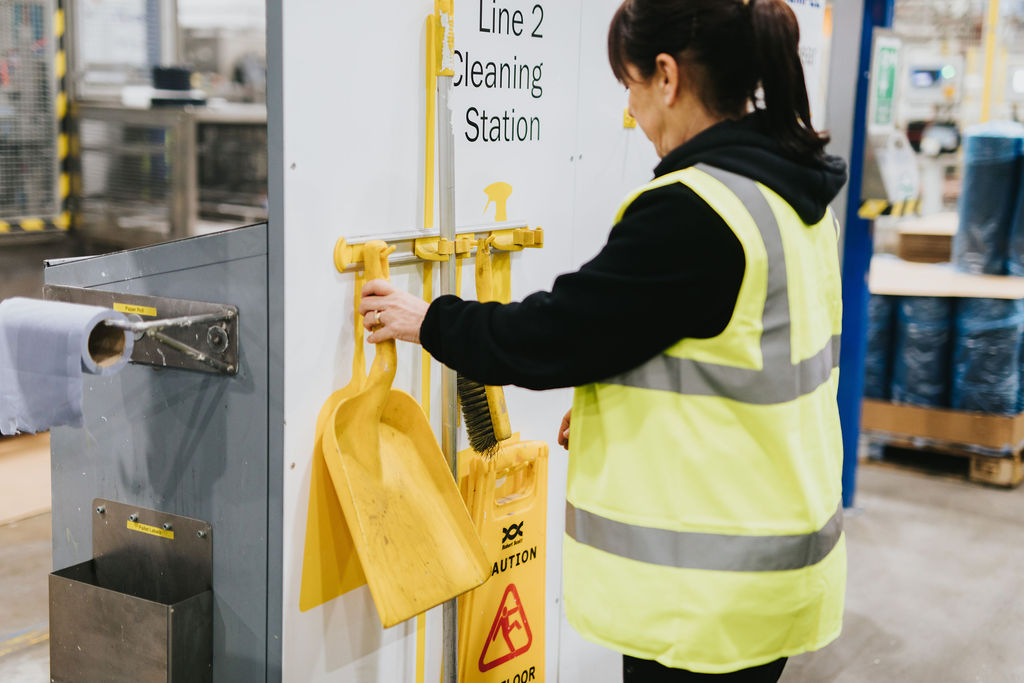
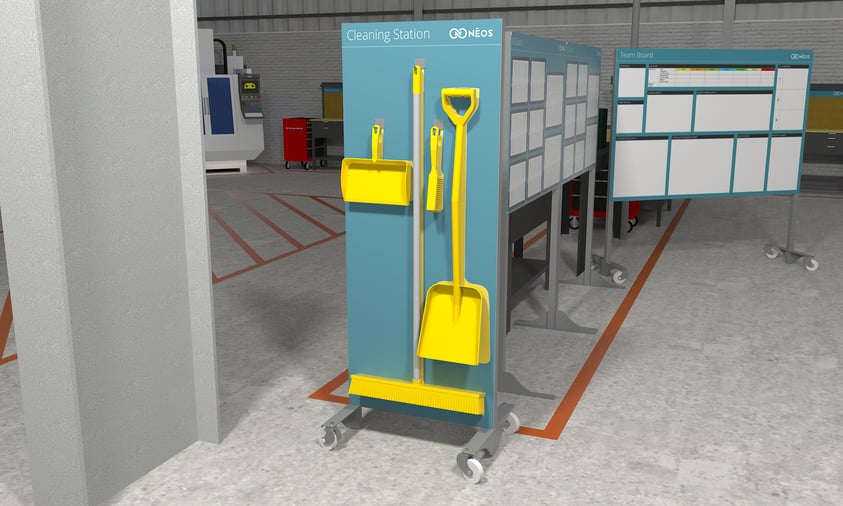
- Storage has to match the space. Cluttered sites lose 5S first because there is nowhere obvious for things to live. Modular cuboids and cleaning stations give items a defined home, which is what stops the homeless-item pile forming in the first place.
- Put the boards where people already are. A board in a side office gets updated for the first month and forgotten by the third. A board on the route people walk anyway stays live.
Get these right and sustaining takes very little. Get them wrong and no amount of end-of-shift enthusiasm holds the line past a busy quarter.
Who Keeps It Alive Day to Day?
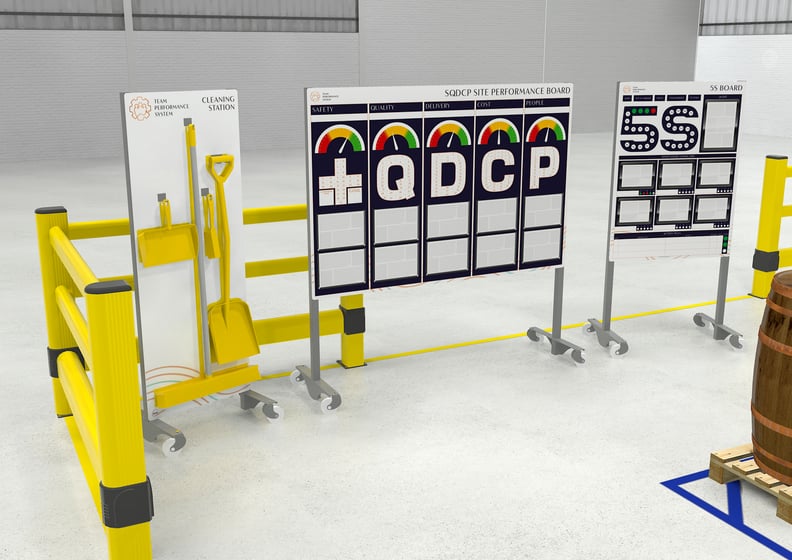
Design does most of the work, but not all of it. The sites that make it work tend to share three light habits, none of which need a big programme.
- A short end-of-shift reset. A few minutes returning tools and clearing surfaces, every shift, so nothing accumulates overnight. It is quicker than the weekly tidy it replaces.
- Checks the team runs themselves. A quick operator-run glance beats a manager arriving with a clipboard. When the people using the area own the check, it survives the weeks the manager is busy.
- Leaders who notice out loud. Not policing, just naming it when the bay looks right. Reinforcement costs nothing and keeps the habit warm.
Does the Law Require Any of This?
Housekeeping is not only a productivity question. Under Regulation 12 of the Workplace (Health, Safety and Welfare) Regulations 1992, floors and traffic routes must be kept free from obstructions and from anything that could cause a person to slip, trip or fall. The general duty in Section 2 of the Health and Safety at Work etc. Act 1974 runs alongside it.
The stakes are not abstract. Slips, trips and falls on the same level were the single most common cause of RIDDOR-reported non-fatal injuries to employees in 2024/25, at 30%, and poor housekeeping is a recognised driver. A visual system that is still working at six months is one of the clearest ways to show a maintained, orderly floor rather than one that is tidy only when an inspection is due.
What Does This Mean for Your Site?
If your 5S launch is a few months back and you are wondering whether it will hold, the honest test is a walk-through: are the outlines full, the lines legible, the boards current, and the corrections happening on their own? Where the answer is no, it is usually the setup working against people, not the people.
That is a fixable problem, and it is the one we spend most of our time on. A visual management review looks at what you already have and where it is quietly decaying, then sets out what would make the standard hold on its own.
You can start with the free two-minute factory safety and efficiency quiz to see where your site stands, or book a free meeting.

About the Author
Alfie White is an Internal Sales Executive at Clarity Safety, where he runs the Visual Management product line and oversees warehouse dispatch. He works with sites on shadow boards, floor markings and 5S setups day to day, so he's seen plenty that are still being used six months on and plenty that got dropped after a few weeks.
Connect with Alfie on LinkedIn